Parole Board of Canada Denies Paul Bernardo Release for a Third Time
After the families of Kristen French and Leslie Mahaffy pleaded with the board in Quebec, a two-member panel refused Bernardo day parole, full parole and escorted absences.
Published
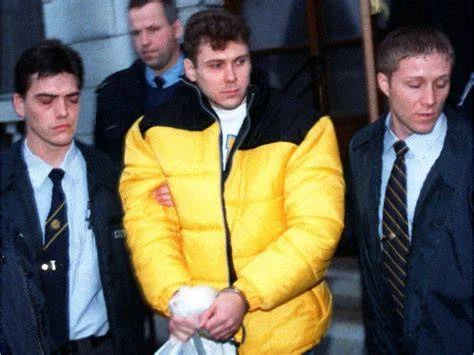
Paul Bernardo asked the Parole Board of Canada on November 26, 2024, to let him move to a halfway house in Quebec, or at the very least to leave prison under escort to attend a community program for sex offenders. After deliberating for about 30 minutes, the two-member panel turned him down. Panel member Tanya Nouwens told him the board was still placing "a lot of weight on the clinical assessments, a lot of weight on the seriousness of your criminal behaviour," and that his risk would be undue. It was the third time he had sought parole and the third time he had been refused; the board also said no in 2018 and 2021.
Bernardo, 60, is serving an indeterminate life sentence for the kidnapping, sexual assault and murder of 15-year-old Kristen French and 14-year-old Leslie Mahaffy in the early 1990s near St. Catharines, Ontario, crimes he committed with the help of his then-wife, Karla Homolka. He has been designated a dangerous offender. Homolka served 12 years in prison after pleading guilty to manslaughter for her role. In refusing him, the panel pointed to his risk of sexual reoffending, his narcissistic personality and his clinical assessments, and to the "extremely violent" and serial nature of his crimes. The Correctional Service of Canada did not support his release. His parole officer told the hearing he had "adjusted well" in medium security but was "overestimating his progress while underestimating the risk he presents."
The hearing took place at La Macaza Institution, north of Montreal, where Bernardo was moved from a maximum-security Ontario penitentiary in 2023, a transfer that set off public outrage. Much of the day belonged to the families. Leslie's mother, Debbie Mahaffy, faced the board in person. "The biggest destruction of the peace and joy and hope in my life has been and remains Bernardo," she said. She was overcome before she could finish, and the families' lawyer, Tim Danson, read the rest of her statement. Leslie's brother, Ryan, who was seven when his sister was killed, spoke by video, his first victim statement since the trial. He described how he and his partner had agonized over naming their children after Leslie and decided against it, afraid of what an internet search would show them. "Bernardo's actions haunt the simplest details of my life, including Father's Day, the day he murdered her," he said.
Kristen's mother, Donna French, could not be there. The board had first planned to keep the families out of the hearing room, citing security, and reversed itself after a political backlash, too late for her to travel to Quebec. She gave her statement remotely. "It has been more than 32 years since my daughter, Kristen, was abducted, sexually assaulted, beaten to within an inch of her young life, tormented, humiliated and murdered, then dumped by the side of a road like a piece of trash," she said. "They say that time heals but I don't for a minute believe that, for I have not healed."
Bernardo spent more than two hours answering the panel's questions. He said he believed he was ready to step gradually back into society, that he would stay in Quebec if released and that he planned to begin French lessons in prison. He told the board he had started committing sexual offenses as "revenge" for the sexual abuse he said his mother suffered and for his father's rejection of him, and that he had wanted to "pay the world back." "I became a sexual sadist, there's no doubt about that," he said. Nouwens asked how attacking girls and women could repay anyone. "You are then victimizing other women," she told him. The board was expected to issue detailed written reasons within 15 days.
Sources
- Paul Bernardo denied parole after victims' families plead he be kept behind bars, The Canadian Press via CP24
- Paul Bernardo denied parole for a third time after victims' families pleaded with parole board, CBC News via Yahoo News Canada
In the Archive
- Paul Kenneth Bernardo
- THE TOP TEN MOST INFLUENTIAL FEMALE KILLERS
- KARLA HOMOLKA: THE KEN AND BARBIE KILLERS
- TWO OF A KIND: 6 OF HISTORY’S MOST SINISTER KILLER PARTNERSHIPS
- SERIAL KILLER FAMILIES
- OCCUPATIONS OF SERIAL KILLERS
- THIRTEEN SENTENCES PRICED BY WHAT THE KILLER KNEW
- SIX CASES WHERE TALKING FIRST DECIDED THE SENTENCE
- THIS DAY IN SERIAL KILLER HISTORY
- SERIAL KILLERS ON THE LOOSE
- TOP FOUR MODERN CASES OF CANNIBALISM