Ex-Nurse Niels Högel Convicted of Murdering 85 Patients at Two German Hospitals
An Oldenburg court sentenced the former intensive-care nurse to life with a finding of particular severity of guilt and acquitted him on 15 of the 100 murder counts.
Published
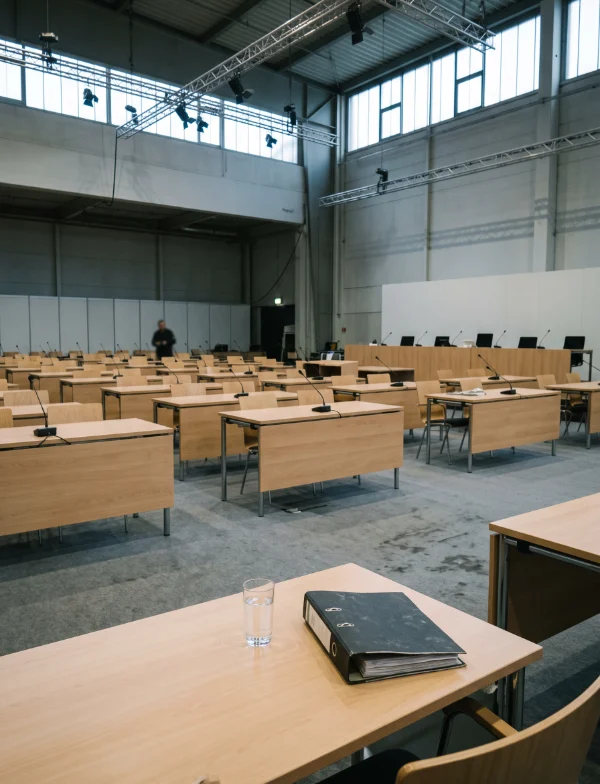
The Oldenburg Regional Court convicted Niels Högel, a former intensive-care nurse, of murdering 85 patients at hospitals in Oldenburg and Delmenhorst on June 6, 2019. He had stood trial on 100 counts of murder. On 15 of them the court acquitted him for lack of evidence.
Presiding judge Sebastian Bührmann sentenced the 42-year-old to life in prison and found that his guilt was of particular severity, a ruling that all but ensures he stays in prison beyond the standard 15-year term. The court also barred him for life from working in nursing, elderly care or emergency services. German courts do not stack sentences, and Högel was already serving a life term imposed in 2015, when he was convicted of two murders and two attempted murders at Delmenhorst.
The court's findings describe a nurse who worked in intensive care first at a clinic in Oldenburg and later in Delmenhorst, and who between February 2002 and June 2005 gave 85 patients drugs that had no medical justification and that brought on cardiac arrest or circulatory collapse. What he wanted, the court found, was the resuscitation that came next. He expected admiration from colleagues and doctors, and gratitude from the patients he appeared to save, whenever a revival worked, and he accepted that it might not. In every case on which he was convicted, it did not. Where an attempt to revive the patient was made at all, it failed, and the patient died within a short time. The dead were between 34 and 96 years old, the dpa news agency reported.
The court weighed his motive as a base one, which under German law makes a killing murder. In most of the cases it also found that he had exploited the trust of his victims, or, where they were asleep or unconscious, the trust of the colleagues working beside him. In several of the later cases it did not, because by then the doctors and nurses around him had already grown suspicious.
German courts take no pleas, so Högel answered the charges from the witness stand during the seven-month trial. He admitted 43 of the killings, disputed five and said he could not remember the other 52. He told the court that his grandmother and his father, both nurses, had been his models for entering the profession. In his closing statement the day before the verdict, he apologized to the families, said he was ashamed, and said he understood the pain and suffering his "terrible deeds" had caused.
Högel appealed, and so did one co-plaintiff, who challenged the acquittal on a single count where the court had not been convinced that Högel had acted. The Federal Court of Justice in Karlsruhe found no legal error in the verdict or the proceedings. Its Third Criminal Senate rejected both appeals in a decision dated September 1, 2020, and the Oldenburg judgment became final.
Sources
- Urteil des Landgerichts Oldenburg im Fall der Tötung zahlreicher Patienten durch einen Krankenpfleger rechtskräftig (Nr. 121/2020), Bundesgerichtshof (Federal Court of Justice)
- Former German nurse convicted of 85 murders in serial killing case, NBC News
Related News
- October 30, 2018: Ex-Nurse Niels Högel Admits Most of 100 Murder Charges as His Oldenburg Trial Opens