Gacy's Victim No. 5 Identified as Francis Wayne Alexander of North Carolina
Forty-three years after his remains were pulled from Gacy's crawl space, genetic genealogy gave the young man a name. His family had never known he was dead.
Published
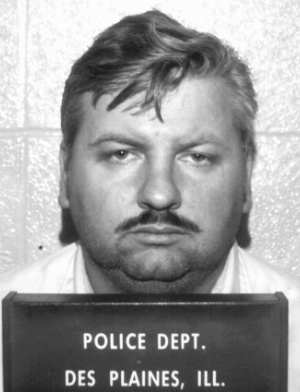
For forty-three years the young man pulled from the crawl space beneath John Wayne Gacy's house on December 26, 1978, had a number instead of a name: Victim No. 5. On Monday, October 25, 2021, Cook County Sheriff Thomas J. Dart gave him his name back. He was Francis Wayne Alexander, born in North Carolina, and he was twenty-one or twenty-two when Gacy killed him, sometime between early 1976 and early 1977.
His family never filed a missing person report. "They just loved him, but they thought that he wanted nothing more to do with them, so that's why there was never a missing person's report," Dart told reporters at the news conference in Maywood. Sheriff's police had told Alexander's family on Friday, October 22. He is survived by his mother, two half-sisters and two half-brothers, and through his sister Carolyn Sanders the family issued a statement. "It is hard, even 45 years later, to know the fate of our beloved Wayne," it read. "He was killed at the hands of a vile and evil man. Our hearts are heavy and our sympathies go out to the other victims' families. Our only comfort is knowing this killer no longer breathes the same air as we do."
The record of his short adult life is thin. After North Carolina he lived for a time in New York, where he married, and then moved on to Chicago in 1975. The marriage lasted about three months, and he was divorced that year. He worked in bars and clubs and lived on the North Side, in an area, the sheriff's office said, that Gacy frequented and where other identified victims had lived. The last trace investigators could find of him was a traffic ticket written on January 5, 1976. Financial records showed he earned little that year, and after that there was no proof of life at all. How Gacy found him is not known.
The identification came through the DNA Doe Project, a nonprofit that uses genetic genealogy to name the unidentified dead. Its volunteers compared a DNA profile from the remains with people who had uploaded their own DNA to a genealogy website and allowed it to be used this way, and the matches led them toward Alexander's family. Sheriff's police then collected DNA from his mother and a half-brother, and it showed a strong genetic association with the remains. Detectives went on to work through financial records, public records and the original post-mortem reports before they were satisfied that Victim No. 5 and Alexander were the same man. Lt. Jason Moran, who led the investigation, called the method "one of the newest investigative tools for investigations of missing and unidentified persons." When Alexander died was worked out largely from when the victim buried on top of him had gone missing.
Gacy killed thirty-three teenage boys and young men in and around Chicago between 1972 and 1978, and twenty-six of them were found in the crawl space of his house in unincorporated Norwood Park Township. He was executed in 1994. Eight victims were buried without names. In 2011 Dart reopened the effort to identify them, had the remains exhumed and asked anyone whose male relative had vanished in the Chicago area in the 1970s to come forward with DNA. William Bundy was named that year and James Haakenson in 2017. Alexander is the third. Along the way the work has solved four unrelated cold-case deaths, found five missing people alive and two others who had died without their families knowing.
"These unidentified young men brutally murdered by this vicious serial killer deserve dignity and that includes knowing their names," Dart said. Five of Gacy's victims are still unidentified, and the sheriff's office asked anyone who believes a male relative may have been among them to call sheriff's police at 708-865-6244.
The day after the announcement, Sanders and her half-brother Richard Clyde spoke to reporters and pushed back on the idea that Alexander had chosen to cut them off. "I don't think any of us ever felt that he didn't want to talk to us," Sanders told the Chicago Sun-Times. She remembered a postcard he sent her before Christmas, shortly before he vanished, with no return address: "Hey baby, I'll see you soon 'cuz I love you. -Wayne." The family said they had tried to report him missing to police in California, where they believed he was working, but that a misunderstanding meant no report was ever filed. "Obviously we always held out hope that he would call or show up at a front doorstep," Clyde said.
Sources
- John Wayne Gacy Victim Identified, Cook County Sheriff's Office
- DNA testing helps identify a man who was killed by John Wayne Gacy, Associated Press (via NPR)
- Family of newly identified Gacy victim can finally grieve, 45 years later, Chicago Sun-Times