Rodney Alcala, the Dating Game Killer, Dies on California's Death Row at 77
Condemned three times for Robin Samsoe's murder and convicted of four more in California and two in New York, he died of natural causes in Kings County.
Published
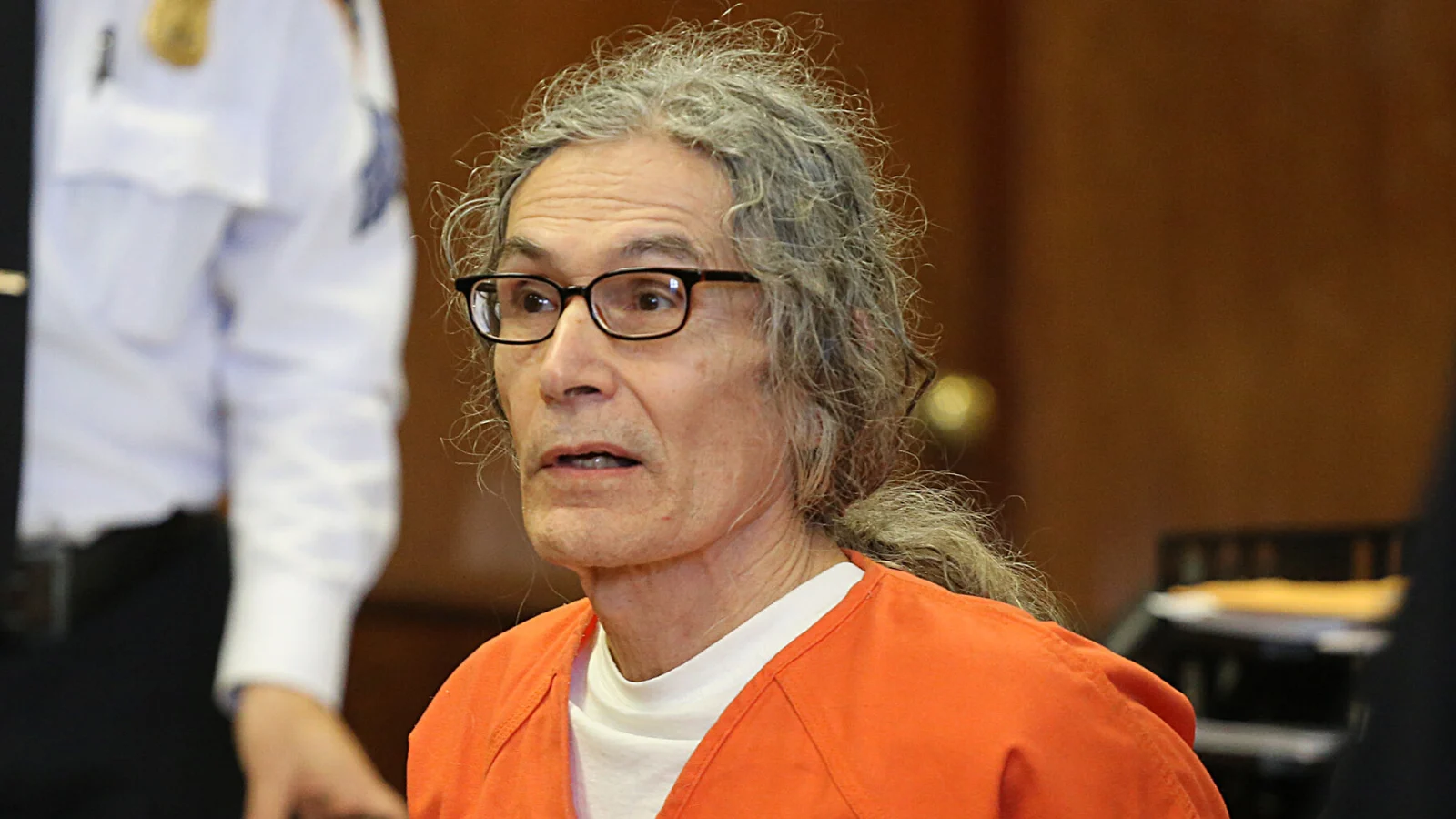
Rodney James Alcala, the photographer known as the Dating Game Killer, died of natural causes at 1:43 a.m. on Saturday, July 24, 2021, at a hospital in Kings County, California. He was 77. The California Department of Corrections and Rehabilitation announced the death that day. He had been sentenced to death three times for the murder of a twelve-year-old girl, and the State of California never carried out the sentence.
The girl was Robin Samsoe, kidnapped and killed in 1979. An Orange County jury sent Alcala to death row for her murder in 1980. The California Supreme Court reversed that judgment in 1984 and ordered a new trial. In 1986 he was sentenced to death a second time, and in 2003 a federal appeals court overturned that sentence too. By then his DNA had been matched to evidence in other killings, and Orange County prosecutors indicted him for the murders of four women.
His third trial ended in 2010. The jury convicted him of five counts of first-degree murder: Samsoe; Jill Barcomb, 18, and Georgia Wixted, 27, both killed in 1977; Charlotte Lamb, 32, killed in 1978; and Jill Parenteau, 21, killed in 1979. He was sentenced to death again. At his trial, according to the Associated Press, Samsoe's mother testified that a pair of gold ball earrings found in a jewelry pouch in Alcala's storage locker belonged to her daughter. Alcala said the earrings were his, pointed to a clip of his 1978 television appearance in which he wore studs, and denied the killings. Investigators said one victim's DNA was found on a rose-shaped earring he kept.
The nickname came from that appearance. In 1978 Alcala was a contestant on the television show "The Dating Game."
New York came next. In 2012 he was extradited there after being indicted for the 1971 murder of Cornelia Crilley and the 1977 murder of Ellen Jane Hover. He pleaded guilty, and in 2013 a New York court sentenced him to 25 years to life. In 2016 prosecutors in Wyoming charged him with the murder of Christine Ruth Thornton, 28, who was six months pregnant. That case never went to trial; a prosecutor said Alcala was too ill to face it, the AP reported, and his death closed it without a verdict.
California's death row was at San Quentin, but for years Alcala had been held more than 200 miles away at the state prison in Corcoran, where he could receive medical care around the clock. Governor Gavin Newsom had imposed a moratorium on executions in the state.
He went to his grave with questions still open. In its announcement, the corrections department said investigators had either suspected Alcala of, or linked him to, other murders in Los Angeles and Marin County in California, in Seattle, in New York, in New Hampshire and in Arizona. After the 2010 verdict, authorities released more than 100 photographs of young women and girls found in his possession, hoping to tie him to unsolved killings elsewhere. Investigators, the AP reported, believe his true victim count may never be known.
What the record does and does not say. Alcala was convicted of seven murders: five in California and two in New York. He was charged with an eighth, Christine Thornton's, and never tried. The corrections department says Thornton disappeared in 1978 and her body was found in 1982; the AP described her death as occurring in 1977. The AP also reported an investigators' estimate that he may have killed as many as 130 people. No court ever ruled on that number, and no official count supports it.
Sources
- Condemned Inmate Rodney Alcala Dies of Natural Causes, California Department of Corrections and Rehabilitation
- Convicted serial killer Rodney Alcala dies on California's death row, Associated Press, via KTVU FOX 2
In the Archive
- Rodney Alcala
- RODNEY ALCALA IN THE COURTS: FOUR OPINIONS ON THE MURDER OF ROBIN SAMSOE, 1984-2008
- MURDER AND MADNESS: RODNEY ALCALA
- DEVIL IS IN THE DETAILS
- TWELVE CASES WHERE THE DEAD ARE STILL NAMELESS
- TWELVE DEATH SENTENCES THE STATE NEVER CARRIED OUT
- THIS DAY IN SERIAL KILLER HISTORY
- PEOPLE WHO HAVE SURVIVED VICIOUS SERIAL KILLERS
- SERIAL KILLER PHOTOGRAPHERS
- SERIAL KILLERS WHO DID THE LAST THING YOU WOULD EXPECT