Peter Sutcliffe, the 'Yorkshire Ripper,' Dies in Hospital at 74 After Testing Positive for COVID-19
The Prison Service confirmed the death of the HMP Frankland prisoner, convicted in 1981 of murdering 13 women. Within hours West Yorkshire Police apologized to the victims' families.
Published
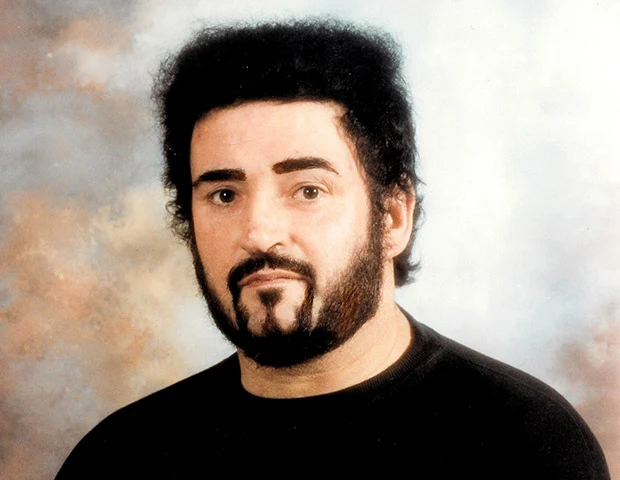
The man who had terrorized the north of England for five years died in a hospital bed on Friday, November 13, 2020. Peter Sutcliffe, the "Yorkshire Ripper," was 74. A Prison Service spokesman confirmed it in two sentences: "HMP Frankland prisoner Peter Coonan (born Sutcliffe) died in hospital on November 13. The Prisons and Probation Ombudsman has been informed."
British media reported that he had tested positive for COVID-19 and refused treatment, and that he was already in poor health, with heart trouble and diabetes among his conditions. His death was to be investigated by the coroner.
Sutcliffe had spent almost forty years locked up for the murders of 13 women in Yorkshire and northwest England between 1975 and 1980. He was arrested in Sheffield on January 2, 1981, confessed to police, then denied the killings at trial. On May 22, 1981, at the Central Criminal Court in London, a jury convicted him of 13 murders and seven attempted murders, and he was given 20 concurrent life terms. Much of his sentence was served in Broadmoor Hospital in Berkshire. In 2016 he was judged stable enough for prison and moved to HMP Frankland in County Durham.
The manhunt that failed to stop him was one of the largest in British history, some 2.5 million hours of police work. Officers interviewed Sutcliffe nine times. In one interview they showed him a photograph of the Ripper's boot print and did not notice he was wearing the boots. Their card index was so badly cross-referenced that details pointing toward him, such as the gap in his teeth and his small feet, were never pulled together. Senior officers were led astray by hoax letters and a tape from a man claiming to be the killer. And when Marcella Claxton survived a hammer attack and helped police draw a picture of her attacker, a likeness that later proved accurate, her account was set aside because police did not believe the Ripper had attacked her, since she was not a sex worker. Sutcliffe was finally caught almost by chance, found in his car with a sex worker. "It was just a miracle they did not apprehend me earlier," he later said. "They had all the facts."
Richard McCann was five when his mother, Wilma, 28, became Sutcliffe's first murder victim, near their home in Leeds in October 1975. "It's a very strange, unusual day," he told the BBC. "I'm not celebrating it but I am grateful." He hoped, he said, that the country would now hear much less about the man who killed her.
Families had long resented the way police talked about the women. When 16-year-old Jayne MacDonald was killed in 1977, officers called her the Ripper's first "innocent" victim, a word that cut every family whose mother or daughter had been a sex worker. Within hours of Sutcliffe's death, Chief Constable John Robins of West Yorkshire Police apologized for the "distress and anxiety caused to all relatives by the language, tone and terminology used by senior officers at the time." Such language may have reflected the attitudes of the day, he said, "but it was as wrong then as it is now."
What was established on November 13, 2020. The Prison Service confirmed the death but gave no cause; the positive COVID-19 test, the refusal of treatment and his other conditions were reported by British media, and the coroner's findings were still to come. Reports differ on whether Sutcliffe's remark about the police having "all the facts" was made at his trial or afterward, so this story does not date it.
Sources
- UK's "Yorkshire Ripper" serial killer Peter Sutcliffe dies, Associated Press, via ClickOnDetroit
- "Yorkshire Ripper" serial killer Peter Sutcliffe dies in U.K. after COVID-19 diagnosis, CBS News, with the Associated Press
In the Archive
- Peter William Sutcliffe
- THE FBI’S YORKSHIRE RIPPER FILE
- PETER SUTCLIFFE: THE YORKSHIRE RIPPER
- PATRICK DAVID MACKAY: THE AXEMAN
- TEN DNA REOPENINGS THAT ANSWERED A DIFFERENT QUESTION
- THE COPYCAT EFFECT
- SERIAL KILLERS AND INSANITY
- TWELVE CASES WHERE THE SUSPECT WAS RELEASED
- THIS DAY IN SERIAL KILLER HISTORY
- SERIAL KILLER QUOTES