FBI Confirms Samuel Little as the Most Prolific Serial Killer in U.S. History
Little, 79, had confessed to 93 murders between 1970 and 2005. Investigators had verified 50, and the FBI released his drawings of women it still could not identify.
Published
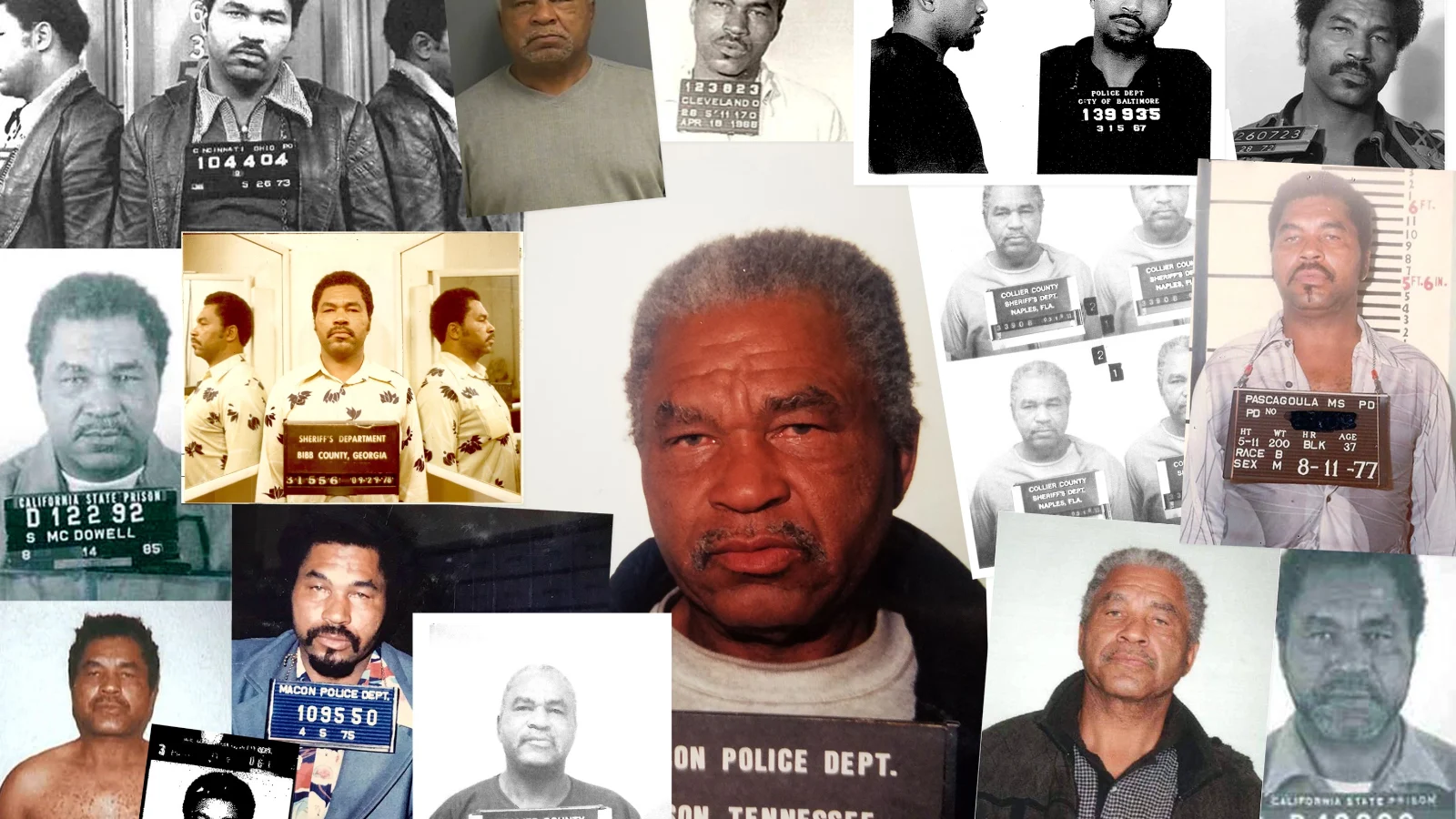
On October 6, 2019, the FBI announced that it had confirmed Samuel Little as the most prolific serial killer in American history. Little, 79 and already serving life in prison, had confessed to 93 murders, and the bureau's crime analysts said they believed every one of those confessions was credible. Law enforcement had verified 50 of them. Many more were awaiting final confirmation.
The finding had been years in the making. Analysts with the FBI's Violent Criminal Apprehension Program, known as ViCAP, had begun linking cases to Little five years earlier, and for nearly 18 months a Texas Ranger had been drawing out of him what the bureau called a breathtaking number of confessions.
By his own account, Little strangled his victims between 1970 and 2005, and the FBI said nearly all of them were women. Many of those deaths had first been ruled overdoses or put down to accidental or undetermined causes. Some of the bodies were never found. Over the decades he had run into police all over the country, the bureau noted, yet he avoided a murder conviction until 2014.
"For many years, Samuel Little believed he would not be caught because he thought no one was accounting for his victims," said Christie Palazzolo, a ViCAP crime analyst. Even with Little behind bars, she said, the FBI meant to seek justice for each victim and close every case it could.
The announcement doubled as an appeal. With the support of the Texas Rangers, ViCAP released video of Little describing five killings that no one had yet matched to a victim, each paired with a portrait he had drawn of the woman from memory. He spoke of a transgender woman he remembered as Marianne or Mary Ann, killed in Miami in 1971 or 1972; a woman he said he strangled on a dirt road outside Little Rock, Arkansas, sometime between 1992 and 1994; a young woman with short blonde hair he said he killed on a hilltop in northern Kentucky around 1984; a woman he met in Las Vegas in 1993, whose body the bureau thought had most likely never been found; and a woman he said he killed beside a canal in New Orleans around 1982.
The FBI warned that Little's memory for dates was not always accurate and that he sometimes misremembered what a victim had worn, so a possible match should not be dismissed on those grounds alone. Many of his drawings had first been made public in November 2018. The bureau gathered them on a single page, with a map of the confessions it had not been able to confirm and the unidentified women his accounts had been matched to, and asked anyone who recognized a face or a detail to call 1-800-CALL-FBI or submit a tip at tips.fbi.gov.
Sources
- Samuel Little: Confessions of a Killer, Federal Bureau of Investigation
Related News
- August 23, 2019: Samuel Little Pleads Guilty to Four Ohio Murders
- December 30, 2020: Samuel Little, Who Confessed to 93 Killings, Dies in California Custody at 80