Ohio Supreme Court Upholds Anthony Sowell's 11 Death Sentences
In a 5-2 ruling the court found that closing a hearing on his police statements did not require a new trial, given the evidence found at his Cleveland home.
Published
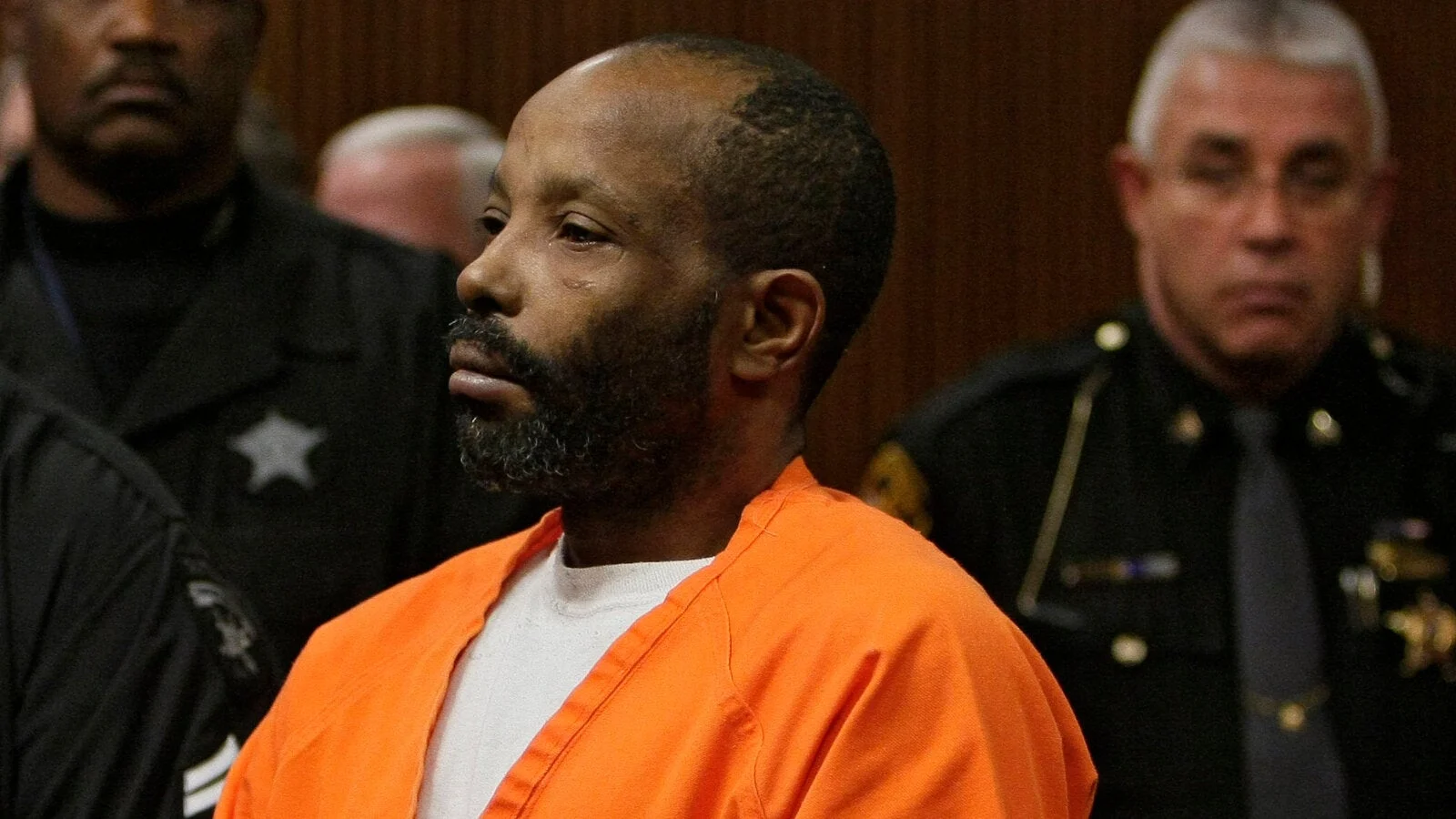
Anthony Sowell's lawyers had one real argument left, and it was not about the eleven women. It was about a locked courtroom door. On Thursday, December 8, 2016, the Supreme Court of Ohio rejected it by a vote of five to two and affirmed all eleven of his aggravated-murder convictions and all eleven of his death sentences.
The case began in the fall of 2009 with a rape complaint. Cleveland police obtained warrants to arrest Sowell and search his house on Imperial Avenue, and when they found he was not home they carried out the search anyway. Inside they found the bodies of Diane Turner and Telacia Fortson. With further warrants and the help of the county coroner's office they found Janice Webb, Nancy Cobbs, Tishana Culver and Tonia Carmichael. Sowell was arrested the next day. A backhoe then uncovered Michelle Mason, Kim Smith, Amelda Hunter and Crystal Dozier, and in the house investigators found the skull of Leshanda Long.
A grand jury returned an 85-count indictment, two aggravated-murder counts for each woman, each carrying death-penalty specifications, and further counts for crimes against three women who survived, Latundra Billups, Shawn Morris and Gladys Wade. The defense called no witnesses. The trial judge acquitted Sowell of the felony-murder and kidnapping counts for Long, the jury convicted him of everything else but a single aggravated-robbery count, and in 2011 he was sentenced to death eleven times.
On appeal he raised eighteen propositions of law and three more in supplement. The one the court spent most of its opinion on concerned a hearing in July 2010, when the trial judge closed the courtroom to decide whether Sowell's interrogation statements could be used. In those recordings he never admitted killing anyone and said he could not remember it. He described hearing a voice that told him to rape "bad" women he met, mostly in East Cleveland, blacking out, and dreaming of choking them; he called himself "the punisher." The judge feared that if those words reached the public, an unbiased jury could not be found.
Justice Terrence O'Donnell, writing for the majority, agreed that the right to a public trial reaches suppression hearings and that the trial court had not put every required finding on the record. But he held the error did not require a new hearing or a new trial. "Although Sowell's statements to police are incriminating, the state presented overwhelming independent evidence of guilt supporting Sowell's convictions and sentence," he wrote. The remains on the property and the condition of the bodies, he said, showed the women had been kidnapped, sexually assaulted and strangled, and a new hearing would be a "vain act." The partial closing of jury selection, the court added, had been requested by the defense itself.
The court weighed his life against the crimes, as Ohio law requires: a childhood in a house where children were beaten, his own account of being molested, seven years in the Marines that ended with the rank of sergeant, an attempted-rape conviction in 1990 and fifteen years in prison, a heart attack in 2007. It found that for each of the eleven murders the aggravating circumstances outweighed all of it beyond a reasonable doubt. Justices Pfeifer, Lanzinger, Kennedy and French joined the opinion.
Justice William O'Neill dissented and would have ordered a new suppression hearing. "I cannot stress strongly enough that the right to a fair, public trial belongs both to the accused and to the citizens of Ohio with equal value," he wrote. Chief Justice Maureen O'Connor agreed that Sowell was owed a new hearing but parted from O'Neill's view that the death penalty is unconstitutional.
Sowell was never executed. He died of a terminal illness in prison on February 8, 2021.
What this story covers. The vote, the holding, the facts of the search and the discoveries, the victims' and survivors' names, the indictment, the verdicts, the closed hearing, Sowell's recorded statements, the mitigation evidence, the quotations and the line-up of the justices come from the Supreme Court of Ohio's own summary of the decision, published by Court News Ohio on December 8, 2016; the full opinion is State v. Sowell, Slip Opinion No. 2016-Ohio-8025. The date of his death comes from the Associated Press report of February 9, 2021. What Sowell said under interrogation is reported here as the court described it, not as an admission.
Sources
- Court Affirms Death Penalty for Cleveland Serial Killer, Court News Ohio (Supreme Court of Ohio)
- Anthony Sowell, Ohio man who killed 11 women, dies in prison, Associated Press via KSAT
Related News
- February 9, 2021: Anthony Sowell, Condemned for the Murders of 11 Cleveland Women, Dies in Prison Before His Execution