South Australian Review Blocks Parole for Snowtown Killer James Vlassakis
A review commissioner overturned the Parole Board's decision to free the youngest Snowtown killer, ruling his release at the first opportunity would risk the community.
Published , updated
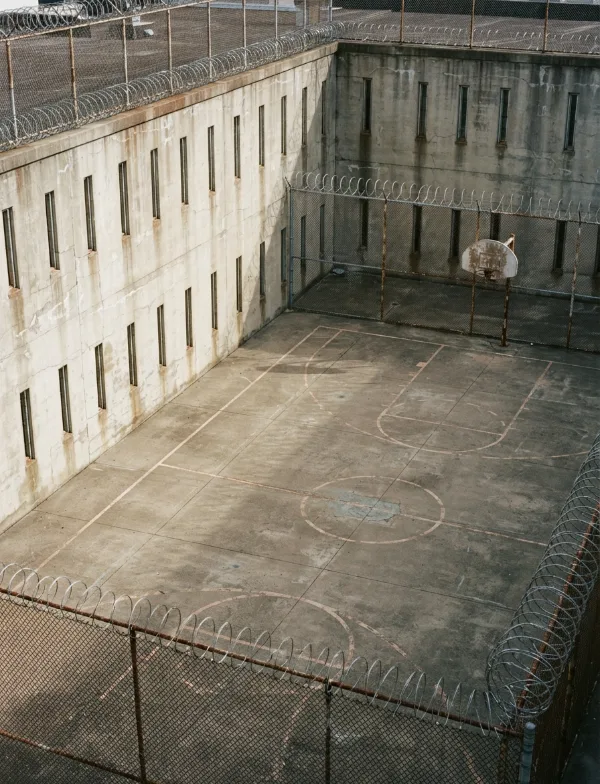
Four months after South Australia's Parole Board granted James Spyridon Vlassakis parole, the decision was overturned. On December 15, 2025, the state's Parole Administrative Review Commissioner, Michael David KC, ruled against his release. The youngest of the four men convicted over the Snowtown "bodies in the barrels" killings would stay in prison, the commissioner ruled, because releasing him now "would be a risk to the community."
Vlassakis was sentenced in 2002 to life imprisonment with a non-parole period of 26 years, counted from June 2, 1999, the day he was taken into custody. On August 5, 2025, with that period served, the Parole Board granted him parole. In October, Attorney-General Kyam Maher asked for a review, arguing that the board had failed to give proper weight to the safety of the community, the likelihood that Vlassakis would keep to his conditions, the circumstances and gravity of the crimes, and the reports placed before it.
The commissioner agreed. "I find that because of the gravity of the offending as described above, with the fact that this is the first occasion on which parole is available, to release Mr Vlassakis at this relatively early stage would be a risk to the community," he wrote. The board, he found, had "underestimated the effect of the gravity of the criminal behaviour of Mr Vlassakis." His reasons gave the crimes one blunt sentence: "These offences were very evilly premeditated by everyone; they were violent, gross, and committed over a substantial period of time."
He acknowledged Vlassakis's behavior in prison and commended his cooperation and guilty pleas, but reminded himself that the sentencing judge had already given Vlassakis "a substantial benefit" in relation to that behavior. The influence of his stepfather, the ringleader John Bunting, who was in a relationship with the teenager's mother, was argued as a mitigating factor. It "could not in any way excuse crimes of this magnitude," the commissioner wrote.
Twelve deaths between 1992 and 1999 were linked to the Snowtown group, and 11 were later ruled murders. Eight of the victims were found in barrels inside a disused bank in the town of Snowtown. Vlassakis pleaded guilty to four of the killings. He was 18 in 1998 when he took part, at Bunting's urging, in the murder of his half-brother, Troy Youde. Fred Brooks, Gary O'Dwyer and David Johnson followed. The remains of all four were found at Snowtown. Vlassakis then became the key witness against Bunting and Robert Wagner, who were convicted of 11 and 10 murders and are serving life without parole. Another accomplice, Mark Haydon, was released in 2024 after serving a 25-year sentence.
At the review hearing, a lawyer for the Attorney-General pointed to drug use recorded in custody and argued that Vlassakis needed more sessions of a program addressing violence. His record showed only nine hours of a modified intervention program, between 2020 and 2021. The notoriety of his crimes kept him out of the usual group classes, and after those nine hours no more was offered, a situation the commissioner called "rather unsatisfactory." His lawyer, Lindy Powell KC, told the review that he had done every course asked of him and would go through a mandatory 12-month rehabilitation process before any release.
The Parole Board's chair, Frances Nelson KC, said the board had been denied procedural fairness because it was not allowed to make submissions at the hearing. "He has concluded that it is too early to release Vlassakis, so in effect he has re-sentenced him," she said. "I just think he's wrong as a matter of law." The board was seeking advice from senior counsel, Dick Whitington KC, on whether the commissioner had fallen into jurisdictional error and whether to ask the Supreme Court to review the ruling.
Some of the families were relieved, said the Commissioner for Victims' Rights, Sarah Quick, but they knew they would face another parole application in the future. "In that sense, their stress and anxiety is simply on pause," she said. "It's not eliminated." Vlassakis, now in his mid-40s, remained under a court order suppressing his image.
What happened next: the ruling did not stand. The Parole Board challenged it in court, the case went back to the review commissioner, by then David Lovell KC, and on September 15, 2026, he dismissed the Attorney-General's application and affirmed the board's August 5, 2025, decision to release Vlassakis on parole. The commissioner's December 2025 reasons were not published where they could be opened; the quotations above are as ABC News reported them from the written decision on the day it was handed down.
Sources
- Parole release of Snowtown murderer James Vlassakis overturned, ABC News (Sophie Holder)
- Snowtown serial killer James Vlassakis gets parole after attempt to block release fails, ABC News (Daniel Keane, Leah MacLennan, Jordanna Schriever)