High Court Overturns Surendra Koli's Death Sentences in 12 Nithari Cases and Acquits Moninder Singh Pandher
The Allahabad High Court ruled the prosecution had not proved the Nithari cases beyond a reasonable doubt, acquitting the servant in 12 and his employer in two.
Published
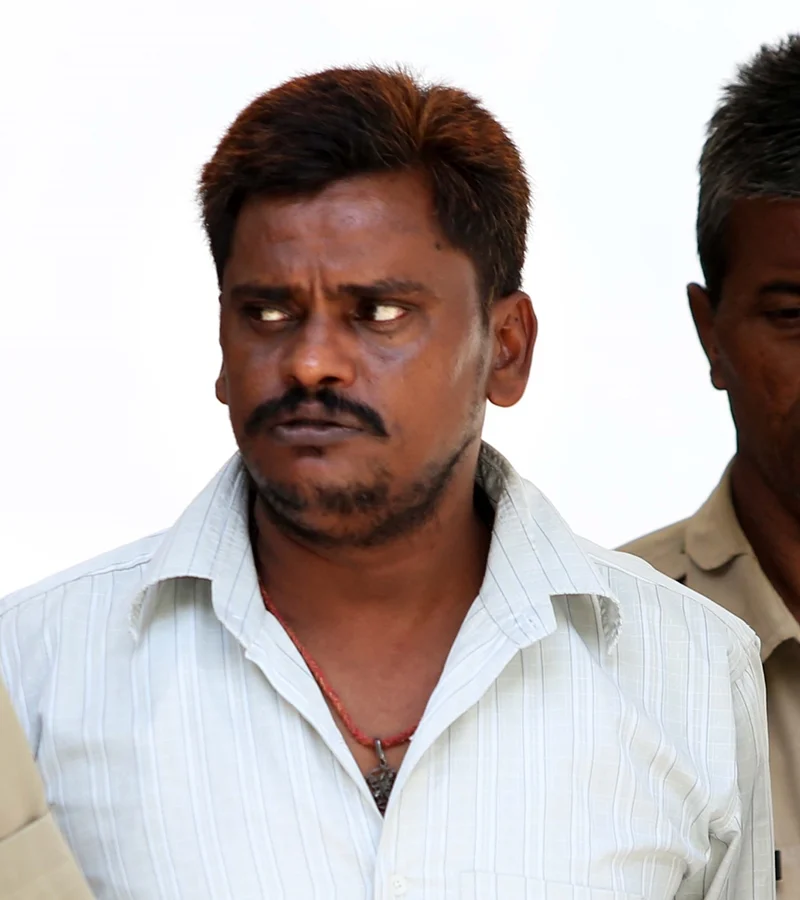
The Nithari case had looked closed: a confession, a row of skulls dug out of a lane behind a house in Noida, and a stack of death sentences. On Monday, October 16, 2023, the Allahabad High Court took most of that apart. A two-judge bench of Justices Ashwani Kumar Mishra and Syed Aftab Husain Rizvi acquitted Surendra Koli in 12 cases in which a trial court had sentenced him to death, and acquitted his former employer, the businessman Moninder Singh Pandher, in the two in which he too had been condemned. The court held that the prosecution had failed to prove its case beyond a reasonable doubt.
The killings came to light at the end of December 2006, when remains were found in the enclosed lane behind House No. D-5 in Sector 31, Noida, Pandher's house, and in the drain running in front of it. Koli worked there as a domestic servant. Most of the remains were of poor children and young women who had gone missing from Nithari, the village that adjoins the sector. Within days the Central Bureau of Investigation took over the cases.
Nineteen cases were registered against the two men in 2007. The CBI filed closure reports in three and charged Koli in the other 16, chiefly on the strength of a confession he made before a Delhi magistrate on March 1, 2007, and on recoveries the police said were made on his pointing out. Trial courts acquitted him in three cases. In the rest he was sentenced to death, case after case, from 2009 to 2021. In the case of Rimpa Haldar, the Supreme Court upheld his death sentence in 2011, but the Allahabad High Court commuted it to life imprisonment in January 2015. The 12 appeals decided on October 16 were the remaining death sentences.
The judgments, which hide the victims' identities behind letters, turned on how the case had been built. Koli's lawyers argued that the confession was neither voluntary nor properly recorded. By the chronology the court reproduced, he had been in police custody for about 60 days before he made it, was given five minutes with a legal aid lawyer, and told the magistrate during the recording that he had been tortured and made to memorize the victims' names and the details of the killings. The judgment also records evidence that sat awkwardly with the prosecution's account: the remains were recovered from a lane outside the boundary of the house, not from inside it; a forensic team that searched the house found only one blood spot of unknown origin; and DNA testing produced at least 15 separate profiles from the remains, of which only eight matched the parents of missing persons.
Pandher's lawyer, Manisha Bhandari, told the Press Trust of India that he had faced six cases in all. He was acquitted in three by the sessions court, and the High Court acquitted him in the remaining three, one in 2009 and two on October 16, a ruling she said might let him walk out of jail. Koli was expected to stay in prison, because the life sentence in the Haldar case still stood. A CBI official said the agency was waiting for the judgment and would decide its next step after studying it.
The number of Nithari cases depends on what is being counted. The Press Trust of India reported 19 cases registered in 2007, three closed by the CBI and 16 tried against Koli. The High Court's judgments say he was acquitted in three and sentenced to death in 13, one of them the Haldar case later commuted to life, which leaves the 12 decided on October 16. After these acquittals, no court stood by a finding that Koli or Pandher caused the deaths in those 12 cases.
Sources
- Surendra Koli vs C.B.I., Capital Case No. 04 of 2019 with Capital Reference No. 03 of 2019 (2023:AHC:199091-DB), High Court of Judicature at Allahabad, via Indian Kanoon
- Nithari serial killings: Allahabad High Court acquits Moninder Pandher, Surender Koli; overturns death penalty, Press Trust of India, via The Tribune