China Executes Gao Chengyong for the Murders of 11 Women and Girls in Gansu and Inner Mongolia
The man who eluded police through 14 years of killings in Baiyin and Baotou was put to death after the Supreme People's Court approved his sentence.
Published
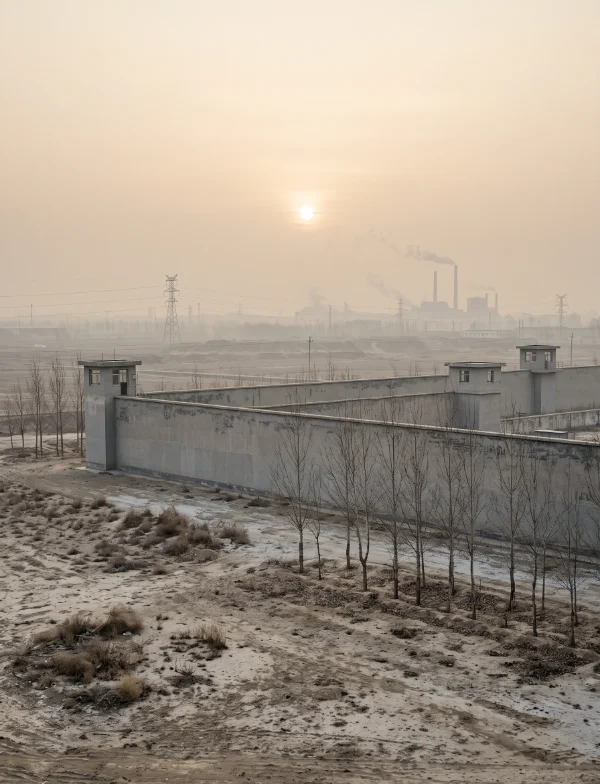
On the morning of Thursday, January 3, 2019, China put Gao Chengyong to death in Baiyin, the industrial city in Gansu province where he had killed most of his victims. The Baiyin Intermediate People's Court, which had sentenced him nine months earlier, announced on its Weibo account that the sentence had been carried out once the Supreme People's Court approved it. He was 54. For close to three decades he had been the unseen figure behind one of the most notorious unsolved murder series in the country.
Between 1988 and 2002, Gao killed 11 women and girls, in Baiyin and in Baotou, across the border in Inner Mongolia. Most were in their 20s. The youngest was eight years old. The court found that he followed them home, usually in daylight, and raped and killed them there. Many of them had been wearing red. He mutilated many of the bodies, and the court, in convicting him, said the damage had been done to satisfy "his perverted desire to dishonour and sully corpses."
For years the killings left Baiyin afraid, and the man responsible seemed to be no one at all. In 2004, Baiyin police offered 200,000 yuan for information leading to the killer, and investigators went through some 100,000 sets of fingerprints in the hunt. None of it found him. The break came only in 2016, when a distant relative of Gao's was arrested in a bribery case and his DNA gave a partial match to genetic material left at one of the murder scenes. Police followed the family line to Gao and arrested him in Baiyin that August. They said his DNA and fingerprints matched those left at the crime scenes.
At his trial in 2017, Gao pleaded guilty. In March 2018, the Baiyin court sentenced him to death for robbery, rape, intentional homicide and defiling corpses, calling his motives "despicable" and his methods "extremely cruel." In his home village of Chenghe, near Lanzhou, residents were stunned that the quiet man they knew had committed the crimes. He never apologized to the families of the women and girls he killed.
What the reports of January 3, 2019, established. The Baiyin court announced the execution on Weibo; that post and the official Xinhua report could not be opened, so this account rests on Caixin and the South China Morning Post. Chinese courts did not make the victims' names public, and none are given here. Accounts differ on the relative whose DNA led police to Gao, variously described as an uncle and as a distant relative held in a bribery case. The method of execution was not disclosed in the reports read for this story.
Sources
- Notorious Serial Killer Executed After 25 Years at Large, Caixin Global
- China's 'Jack the Ripper' executed for murder of 11 women and girls, South China Morning Post