Kyoto Court Sentences Chisako Kakehi to Death for Three Cyanide Murders
The 70-year-old the Japanese press called the Black Widow poisoned men who had made her the beneficiary of their insurance, the judge ruled, rejecting a dementia defense.
Published
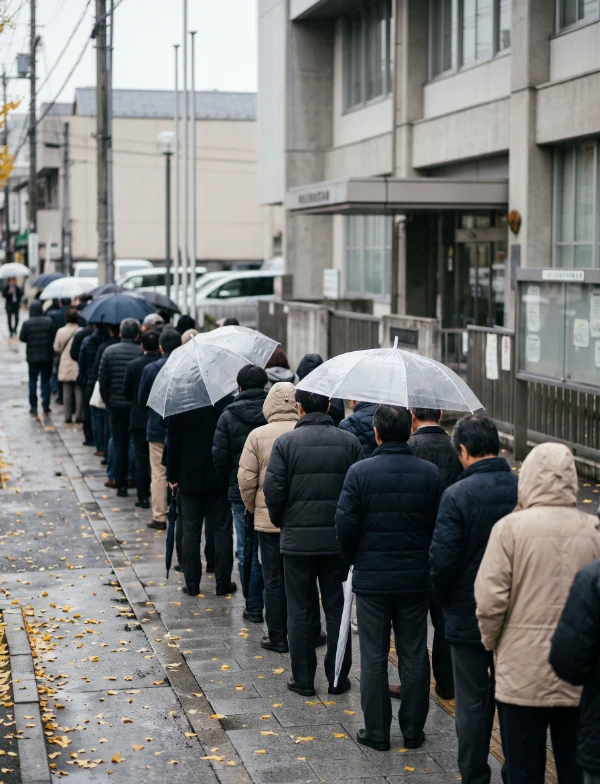
More than 560 people stood in line outside the Kyoto District Court on Tuesday, November 7, 2017, for the 51 public seats in the courtroom. Inside, Chisako Kakehi, 70, grey-haired and wearing a hearing aid, asked the judge to speak up. Then she listened without any sign of emotion as Judge Ayako Nakagawa sentenced her to death for murdering three men, one of them her husband, and trying to murder a fourth, by giving them cyanide.
"The accused made the victims drink a cyanide compound with a murderous intention in all four cases," Nakagawa told the court, according to the public broadcaster NHK. "The cases were well prepared in advance. They were cunning and malicious. I have no choice but to impose the ultimate penalty." She had killed, the judge said, "for the love of money," poisoning men who trusted her completely after they made her the beneficiary of their life insurance. The court rejected the defense argument that dementia left Kakehi without criminal responsibility.
The Japanese press had called her the Black Widow and the Poison Lady. Over about ten years she was reported to have collected around one billion yen, some $8.8 million, in insurance payouts and inheritances from a long line of partners, most of them elderly or ill, some met through dating agencies where she reportedly asked for men who were wealthy and childless. Most of the money was said to have been lost in failed financial trading. Cyanide was found in the bodies of at least two of the men, and police reportedly found traces of it in the rubbish at her Kyoto home, and drug paraphernalia and medical books at an apartment she kept south of the city. She was said to have hidden some of the poison in a plant pot and later thrown it away.
The trial had lasted 135 days, the second-longest jury trial since Japan brought lay judges into its courts in 2009. Kakehi said nothing when it opened in June, then stunned the room by admitting that she had killed her fourth husband in 2013. "I killed him ... because he gave other women tens of millions of yen but did not give me even a penny," she said, according to Jiji Press. She had told the judges she was ready to hang. "Even if I were executed tomorrow, I would die smiling." Her lawyers appealed the moment the sentence was passed.
What this story covers. It draws on the AFP report of November 7, 2017, as carried by the Sowetan, which relies in turn on NHK and Jiji Press for what was said in court. The court's judgment itself was not available to us. The other victims are not named here because the report we read did not name them, and the financial figures are as the press reported them.
Sources
- Japan's 'Black Widow' to hang for murder, Sowetan (AFP)