THE BOY MURDERER LOOSE AGAIN: THE NEW ORLEANS BULLETIN, APRIL 29, 1874
The police brought him to the undertaker's to look at what had been done. The body was that of Horace Mullen, four and a half years old, the son of a Dorchester cabinet-maker named John A. Mullen, and it had been found in a marsh near Dorchester with the head nearly severed and about thirty stab wounds. The boy they had arrested was fifteen. His name was Jesse Pomeroy, and The New Orleans Bulletin carried two wire reports on the case under a single head on April 29, 1874: "The Boy Murderer Loose Again."
The first report explains the "again." The suspect had lately been pardoned from the State Reform School, where he had been sent "for cutting and mutilating young children." The second report takes him into the room with the body. Asked whether he had seen the child before, he said, "Yes, but I don't want to look at him any more." He trembled the whole time. Asked how he got the blood off the knife, he said he had thrust it into the ground of the marsh. If he had done it, he said, he was sorry, and he hoped his mother would not find out.
Then Detective Woods asked whether he had done that, meaning the cutting. "Yes, I killed him," the boy answered, and on the way back, "I suppose I killed him." Woods asked what ought to be done with him. "Put somewhere so I can't do such things." He was taken to the Charles street jail. The paper adds that the child was cut in the same places as the children he had mutilated in Chelsea and South Boston, that his mother was a dressmaker on Broadway in South Boston, "a worthy and highly respected woman," and it ends on its own verdict: "The youth is undoubtedly insane."
These are two wire takes printed far from Boston, and they report what the police said the boy told them, not sworn testimony or anything a court found. The first take gets his name wrong, calling him "Edward Pomeroy"; the second, and every later line, names him Jesse. The headline's "murderer" and the closing judgment on his sanity are the newspaper's words, written before any trial had begun, and this item says nothing of how the case ended in court. The earlier victims in Chelsea and South Boston are left unnamed here, as the paper left them.
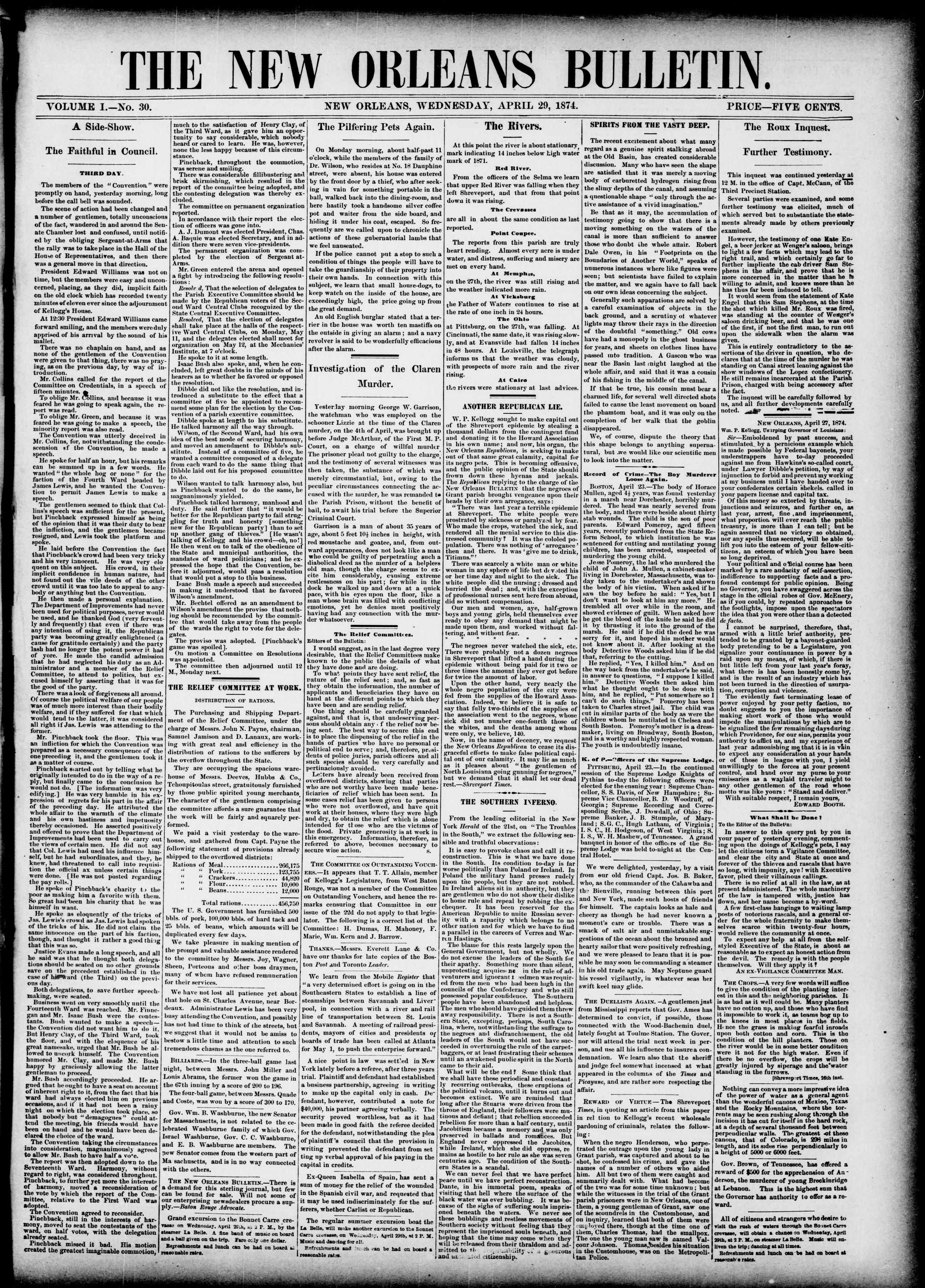
Printed in 1874, The New Orleans Bulletin is in the public domain. The Library of Congress holds the scan in Chronicling America, and the full citation and its rights statement are printed under the image.
The type is clean and heavy and the page well preserved, so the transcription is complete and nothing is marked illegible. The two wire takes are set down in the order printed. The paper's forms are kept: "4½ years," "beside about thirty stab wounds," "Charles street jail" with a small s, and both names for the boy, "Edward" in the first paragraph and "Jesse" in the second.
Transcription
Transcribed word for word from the page scan. Original spelling, punctuation, capitalisation and typographical errors have been kept exactly as printed. Unreadable words are marked [illegible]. Nothing has been modernised or corrected.
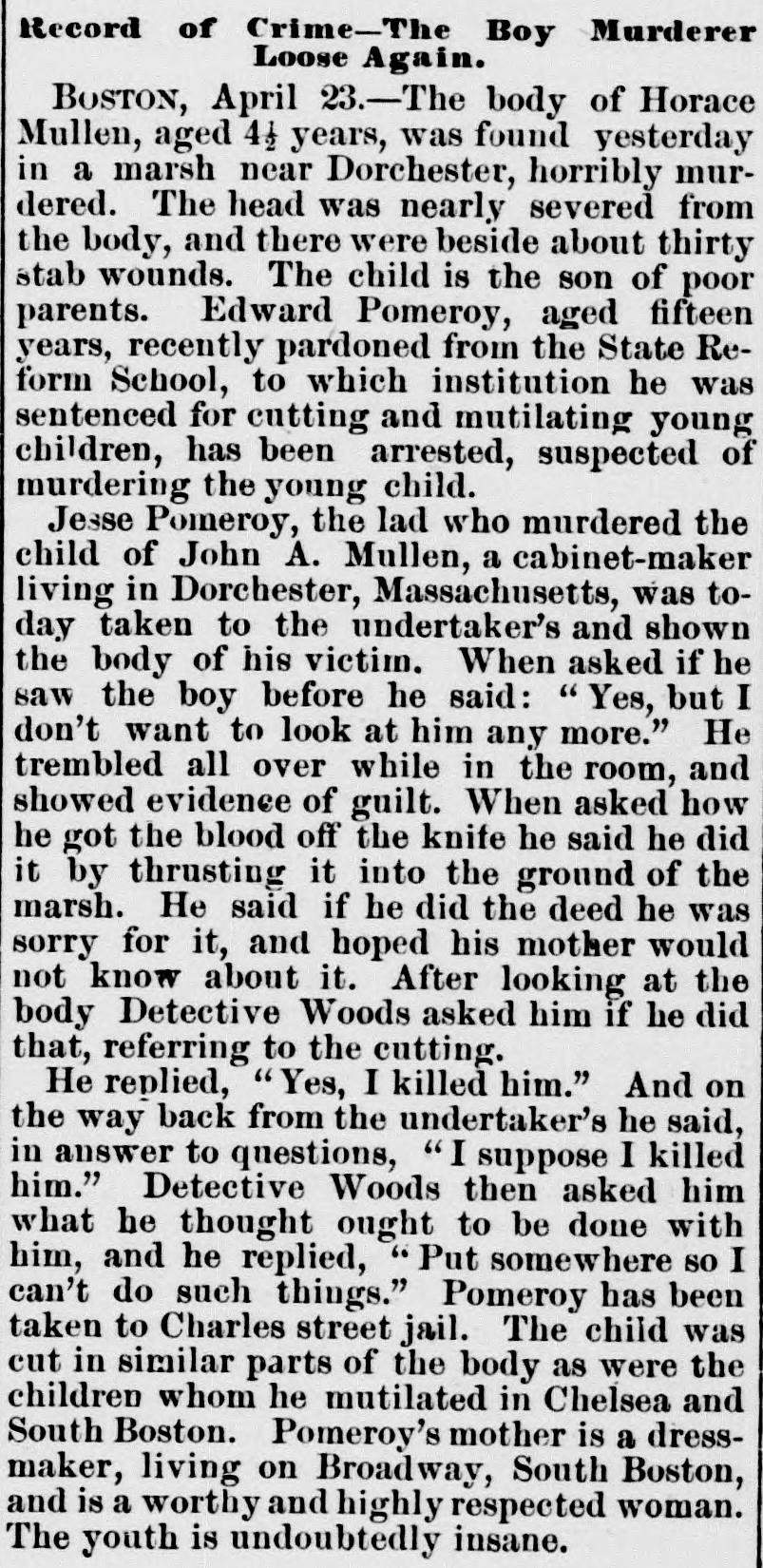
Record of Crime—The Boy Murderer Loose Again.
BOSTON, April 23.—The body of Horace Mullen, aged 4½ years, was found yesterday in a marsh near Dorchester, horribly murdered. The head was nearly severed from the body, and there were beside about thirty stab wounds. The child is the son of poor parents. Edward Pomeroy, aged fifteen years, recently pardoned from the State Reform School, to which institution he was sentenced for cutting and mutilating young children, has been arrested, suspected of murdering the young child.
Jesse Pomeroy, the lad who murdered the child of John A. Mullen, a cabinet-maker living in Dorchester, Massachusetts, was today taken to the undertaker's and shown the body of his victim. When asked if he saw the boy before he said: "Yes, but I don't want to look at him any more." He trembled all over while in the room, and showed evidence of guilt. When asked how he got the blood off the knife he said he did it by thrusting it into the ground of the marsh. He said if he did the deed he was sorry for it, and hoped his mother would not know about it. After looking at the body Detective Woods asked him if he did that, referring to the cutting.
He replied, "Yes, I killed him." And on the way back from the undertaker's he said, in answer to questions, "I suppose I killed him." Detective Woods then asked him what he thought ought to be done with him, and he replied, "Put somewhere so I can't do such things." Pomeroy has been taken to Charles street jail. The child was cut in similar parts of the body as were the children whom he mutilated in Chelsea and South Boston. Pomeroy's mother is a dressmaker, living on Broadway, South Boston, and is a worthy and highly respected woman. The youth is undoubtedly insane.
Transcriber's notes
- Readability: excellent. Clean, heavy type on a well-preserved page. No [illegible] markers were needed.
- Kept as printed: the paper names the arrested boy "Edward Pomeroy" in the first paragraph and "Jesse Pomeroy" in the second — the same person, wrongly given a first name in the opening wire item. Both forms are left exactly as printed.
- Also kept as printed: "4½ years", "beside about thirty stab wounds", "Charles street jail", and the two quoted replies with the paper's own punctuation.
- The item sets two separate wire takes of the same day's news under one head. Both are transcribed in the order printed. It is a contemporary record of what Pomeroy said when he was confronted with the body, six days after the killing of Horace Mullen.