Jury Convicts Fredrick Scott of Four Kansas City Trail Murders and Acquits Him of Two
A Jackson County jury found Scott guilty of killing John Palmer, Mike Darby, Karen Harmeyer and Steven Gibbons, and not guilty in the deaths of David Lenox and Timothy Rice.
Published
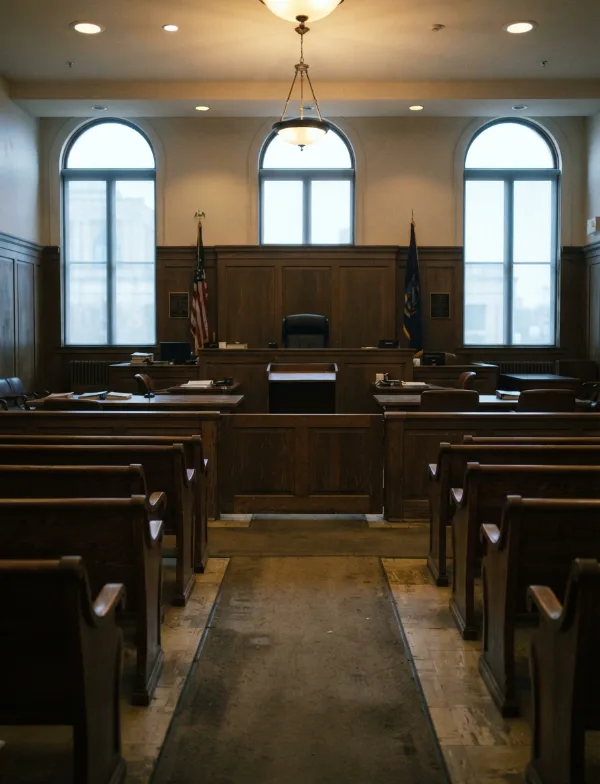
A Jackson County jury found Fredrick Scott guilty on September 22, 2026, of murdering four people along and near the walking trails of south Kansas City, nearly ten years after the first of them died. The panel of seven women and five men convicted him of four counts of first-degree murder and four counts of armed criminal action in the deaths of John Palmer, Mike Darby, Karen Harmeyer and Steven Gibbons. It found him not guilty of the same two charges in the deaths of David Lenox and Timothy Rice.
Scott, who had pleaded not guilty, went to trial charged with all six killings, which took place in 2016 and 2017. Four of the six deaths happened on or near the Indian Creek Trail, and for most of a year people in south Kansas City walked those paths afraid.
That afternoon the same jury returned to the courtroom with its recommendation on punishment: life in prison without the possibility of probation or parole on each murder count, and the maximum fifteen years on each count of armed criminal action. Formal sentencing is set for November 23.
What the jury heard
The trial ran three weeks. Prosecutors called more than seventy witnesses and put hundreds of pieces of evidence in front of the jurors. At its center was an eleven-hour police interrogation from 2017, played in court, in which Scott confessed to killing John Palmer and dragging his body off the trail. He admitted that he had lied when he reported the gun stolen two days before the shooting, and he acknowledged that a red shirt found at the scene, his DNA on the inside and Palmer's blood on the outside, was his.
He also admitted shooting Steven Gibbons, and said the gun was the one police later recovered from his home, though he had reported that weapon stolen the month before. A forensic examiner for the state testified that bullet fragments and shell casings from the scenes where Gibbons and Karen Harmeyer died matched that gun. In the interrogation Scott never gave a reason for any of it, beyond saying he was upset over the murder of his brother.
He denied the other killings. He did admit using the Indian Creek Trail, visiting the apartment complex where David Lenox was killed, and being on the trail on the same day, at about the same time, that Mike Darby was killed.
The defense never disputed that Scott killed Palmer and Gibbons. Its argument was about his state of mind: that there had been no premeditation, no cool deliberation, only a confused and mentally ill young man in turmoil. Prosecutors answered that all six deaths followed a clear pattern in places Scott knew. His mental illness had shaped the case for years before any of this was argued, as he moved in and out of competency to stand trial and the trial date slipped again and again.
The families
Many relatives came to court every day. Brian Darby, Mike Darby's son, called the verdict bittersweet and said the decade had worn the family down. "Every family has its own kind of grief, and this is ours," he said. His sister, Alison Boddicker, told the court she thinks about her father's death first thing every morning and last thing every night. Kathy Palmer, John Palmer's widow, said that losing him "felt like I was torn in half."
Jackson County Prosecutor Melesa Johnson said that while justice can be delayed, for most of the families "today justice was not denied." She said she was heartbroken for the Lenox and Rice families and wanted them to know the trial team had fought for them. "We believe in the judicial system," she said, "even when it does not weigh in our favor."
The jury's sentencing recommendation and the November 23 date are as reported from the courtroom on verdict day; the judge has not yet imposed sentence. David Lenox and Timothy Rice are named here only because Scott was tried and acquitted in their deaths. The jury did not find that he killed them, and nothing in this story says he did.
Sources
- Jury finds Fredrick Scott guilty of 4 Indian Creek Trail murders, not guilty of 2, KSHB 41 News (Kansas City)