Unabomber Ted Kaczynski Dies at 81 in a Federal Prison Medical Center
Kaczynski, serving life for a 17-year bombing campaign that killed three people, died at FMC Butner in North Carolina. Anonymous AP sources said it was suicide.
Published
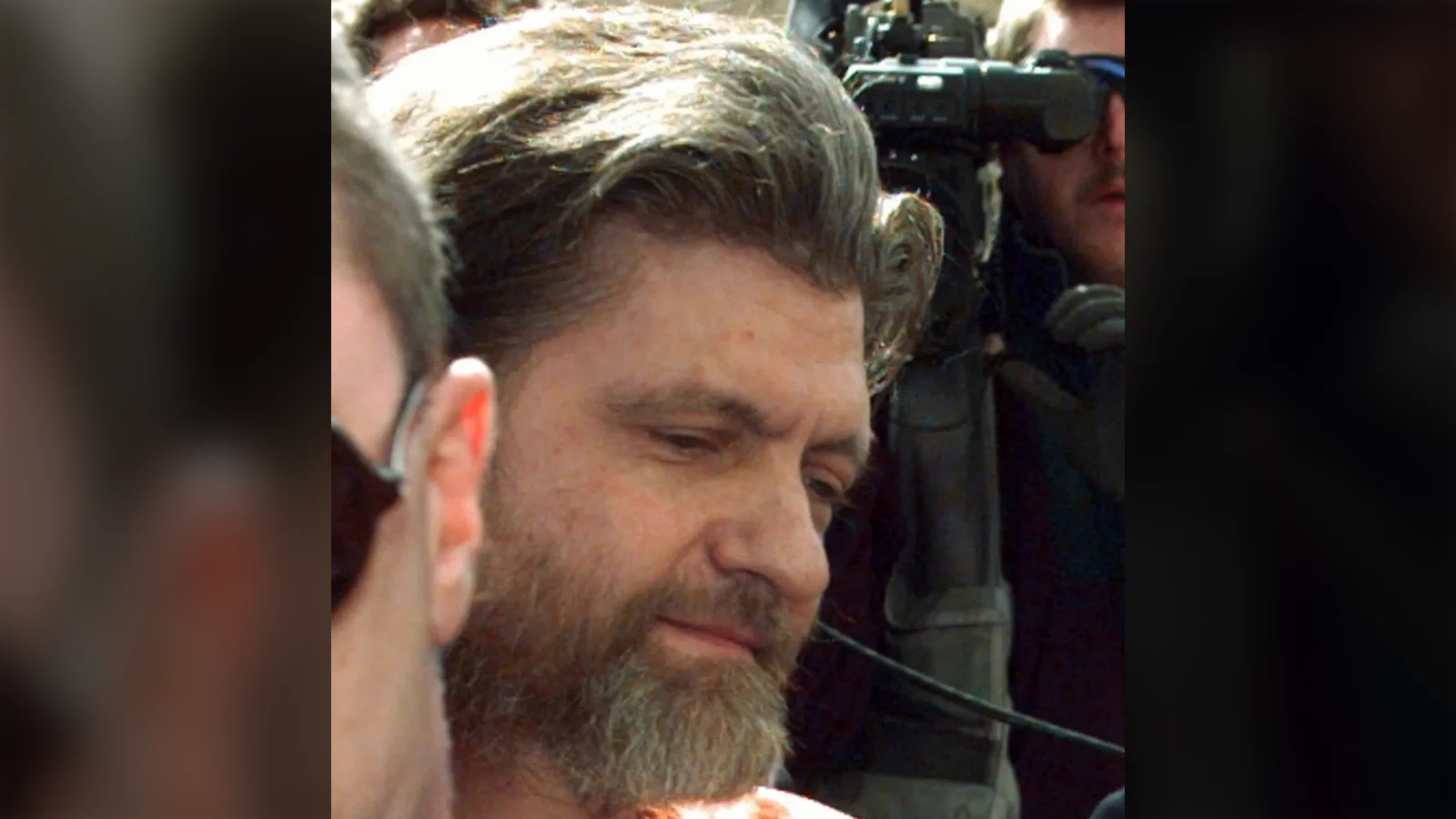
Ted Kaczynski, the Unabomber, died on Saturday, June 10, 2023, at the Federal Medical Center in Butner, North Carolina, the prison hospital where the federal Bureau of Prisons had held him since 2021. He was 81 and suffering from late-stage cancer. A Bureau of Prisons spokesperson confirmed the death to the Associated Press that day.
Four people familiar with the matter told the AP that he had died by suicide. They spoke on condition of anonymity because they were not authorized to discuss it. According to their account, Kaczynski was found unresponsive in his cell around 12:30 that morning. Emergency responders performed CPR and revived him, and he was taken to a hospital, where he was pronounced dead later in the morning.
His campaign ran for 17 years. Beginning in 1978 with a crude device at a Chicago university, he mailed or hand-delivered a series of increasingly sophisticated bombs to academics, airline targets and businesses, and later admitted 16 bombings. Three people died. The FBI's own history of the case lists them by what they did: the owner of a Sacramento computer store, killed by a bomb left in his parking lot in December 1985; an advertising executive, killed by a package bomb sent to his New Jersey home in December 1994; and the president of the California Forestry Association, killed by a mailed bomb in his Sacramento office in April 1995. The AP counted 23 people injured, several of them permanently maimed.
The bureau's task force, which grew to more than 150 investigators, learned little from the wreckage that pointed to the bomber. He built his devices from scrap and left no forensic trace, and the victims, investigators later learned, had been chosen at random from library research. The break came in 1995, when he used the threat of more violence to get The Washington Post and The New York Times to publish his 35,000-word manifesto. His brother, David, and David's wife, Linda Patrik, recognized its tone and went to the FBI. David supplied letters and documents his brother had written, and the bureau's linguistic analysis concluded that the same person had almost certainly written both.
Investigators arrested Kaczynski on April 3, 1996, at the 10-by-14-foot cabin outside Lincoln, Montana, that he and his brother had built. Inside were bomb components and some 40,000 handwritten journal pages that included bomb-making experiments and descriptions of the Unabomber's crimes. While awaiting trial in 1998 he tried to hang himself. A psychiatrist diagnosed him as a paranoid schizophrenic, a finding he rejected, and he pleaded guilty in January 1998 rather than let his lawyers present an insanity defense. That May he was sentenced to four life sentences plus 30 years and sent to the federal Supermax prison in Florence, Colorado, where he spent the next 23 years before the transfer to Butner.
The cause of death was not officially established in June 2023. At the time, the only report of suicide came from the four people who spoke to the AP anonymously; the Bureau of Prisons confirmed only that he had died. The North Carolina Office of the Chief Medical Examiner's autopsy report, reported by NBC News in April 2024, ruled the death a suicide by hanging and recorded that he was pronounced dead at 8:07 a.m. at Duke University Hospital in Durham. The report said he had been found around midnight, a little earlier than the 12:30 a.m. given by the AP's sources, and that his rectal cancer, diagnosed in 2021, had reached stage 4. Federal law enforcement, it said, had no concern of foul play.
Sources
- 'Unabomber' Ted Kaczynski died by suicide in prison medical center, AP sources say, Associated Press, via WHYY
- 'Unabomber' Ted Kaczynski had late-stage rectal cancer and was 'depressed' before prison suicide, autopsy says, NBC News
- Unabomber, Federal Bureau of Investigation