David Fuller Given Whole-Life Orders for the 1987 Murders of Wendy Knell and Caroline Pierce
DNA solved the Tunbridge Wells killings after 33 years and exposed his abuse of more than 100 bodies in hospital mortuaries. He will never be released.
Published
Caroline Pierce's body was found in a water-filled dyke on Romney Marsh on December 15, 1987. Thirty-four years later to the day, on December 15, 2021, the man who killed her stood in the dock at Maidstone Crown Court and was told he would never be released. Mrs Justice Cheema-Grubb sentenced David Fuller, 67, to life imprisonment with a whole-life order for the murder of Caroline Pierce, and another for the murder of Wendy Knell.
Wendy Knell was 25. On June 22, 1987, her boyfriend dropped her off outside her ground-floor flat in Guildford Road, Tunbridge Wells. Fuller, who had been watching the flat and had once lived a hundred yards away, got in, probably through an insecure window, struck her on the head and asphyxiated her. She managed a photo shop on Camden Road and planned to marry; her mother told the court she had longed to have children. Caroline Pierce was 20, a manager at an American restaurant on the same road. Five months later, on November 24, Fuller attacked her outside her basement flat in Grosvenor Park as she came home from seeing friends. Neighbors heard screams. Her mother, Katrina Frost, wrote of a 34-year nightmare that began the night she was driven across Kent to identify her only child.
The judge found the killings premeditated and sexually motivated. Fuller had prowled the neighborhood, picked out both women and attacked each shortly after she reached home. The deaths became known locally as the bed-sit murders, and they went unsolved for more than three decades. Kent Police's cold case team pushed for a new forensic review in 2019. Fresh samples from the Pierce scene were linked to the Knell scene for the first time, and a familial DNA search, carried out with help from more than 20 other forces, led to a relative and then to Fuller. He was arrested on December 3, 2020. A sample taken in custody matched within 36 hours.
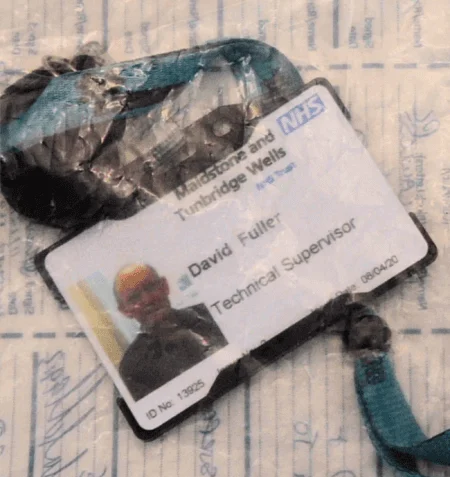
The search of his home uncovered a second, secret life. For years, working in maintenance at the Kent and Sussex Hospital and later as an estates supervisor at Tunbridge Wells Hospital in Pembury, Fuller had used his swipe card to enter the hospital mortuaries out of hours and had sexually abused the bodies of at least 102 women and girls, from a girl of nine to a woman of 100, filming what he did. Eighty-two had been identified; the names of some 20 may never be known. Fuller pleaded guilty to those offences and others on October 8, 2021, and four days into his murder trial, on November 4, he pleaded guilty to both killings. He had denied them for months and had challenged the DNA evidence.
The mother of the youngest mortuary victim stood up in court to speak about her daughter. "It will haunt me forever and the rest of my life," she said.
"Having killed two young women who were full of the promise of life you became a vulture, picking your victims from among the dead," the judge told Fuller. "The sentence I am about to pass means you will spend every day of the rest of your life in prison." For the 51 other offences she imposed a total of 12 years, to run at the same time as the life sentences.
What the record shows. The sentencing remarks, published by the judiciary of England and Wales, carry a reporting restriction under the Sexual Offences (Amendment) Act 1992: the women and girls abused in the mortuaries may not be identified, and none is named here. The government announced an independent inquiry into how Fuller's offending went undetected.
Sources
- R v David Fuller: Sentencing Remarks, Courts and Tribunals Judiciary (Mrs Justice Cheema-Grubb, Crown Court at Maidstone)
- David Fuller: double murderer who abused dozens of corpses in mortuaries given whole life sentence, NationalWorld