South Korean Court Clears Yoon Seong-yeo, Jailed 20 Years for a Hwaseong Murder Lee Chun-jae Confessed To
A Suwon judge declared Yoon innocent of the 1988 rape and murder of a 13-year-old girl, found his confession was coerced, and apologized on behalf of the judiciary.
Published
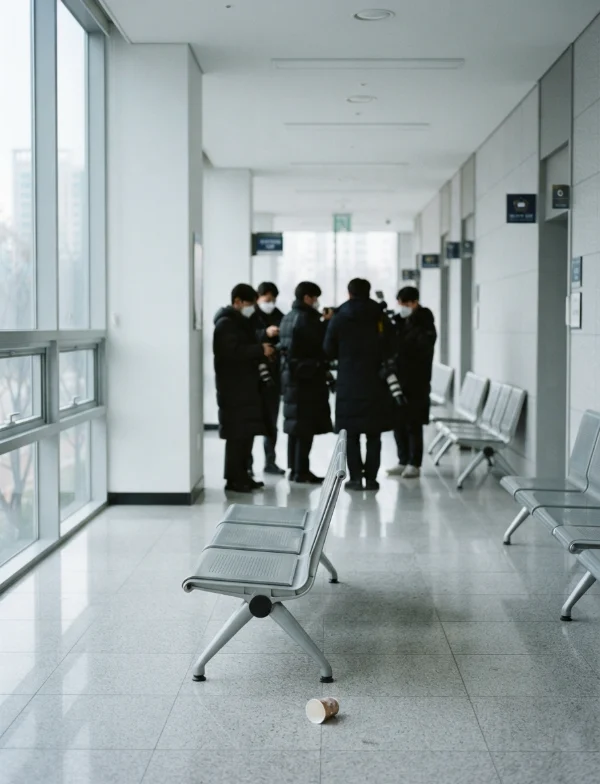
"The defendant is innocent," Judge Park Jeong-je announced in the Suwon District Court on Thursday, December 17, 2020, and the gallery broke into applause. Yoon Seong-yeo, 53, listened quietly. More than 31 years after his arrest, he had been cleared of the 1988 rape and murder of a 13-year-old girl in Hwaseong, a crime for which he had spent two decades in prison and which another man, Lee Chun-jae, had since confessed to. The judge apologized to him on behalf of the judiciary for the "immense physical and mental pain" the wrong verdict had caused.
"I hope no one ever has to go through what I went through and that all cases receive fair trials," Yoon told reporters afterward.
The girl was killed on September 16, 1988, in Jinan-ri, in what was then Hwaseong County, Gyeonggi Province. Hers was counted as the eighth of 10 murders of women and girls in the Hwaseong area between 1986 and 1991, a series that went unsolved for decades and later inspired Bong Joon Ho's 2003 film "Memories of Murder." Police, under heavy public criticism for failing to find the killer, arrested Yoon in July 1989. He was 22, a mechanic in the farming town, and investigators concluded that he had committed a copycat crime. He pleaded not guilty and said police had forced him to confess. The Suwon District Court sentenced him to life in October 1989, and the Supreme Court upheld the sentence in May 1990. He was released on parole in 2009.
The retrial took the old case apart piece by piece. Yoon's confession, the court found, had been extracted through harsh treatment while he was illegally arrested and detained; Asia Business Daily reported that police had kept him awake for three days and made him do squat jumps and stand up and sit down over and over. Because Yoon had trouble reading and writing, police had dictated his statement for him to write out. The statement also failed to match the scene. It had him climbing over a wall because the front gate was locked, but the on-site report recorded no lock on the gate, and the court doubted that Yoon, whose left leg was disabled by polio, could have scaled the wall without much difficulty. A National Forensic Service finding that linked hair from the scene to Yoon was, the court said, unclear in its basis and riddled with errors and contradictions.
Lee's confession, by contrast, matched the physical evidence, and the court found it highly credible. Lee, now 57, was already serving a life sentence for murdering his sister-in-law in 1994 when police announced in 2019 that he had confessed to all 10 Hwaseong killings. Yoon filed for a retrial that November. In July 2020, police concluded that Lee was responsible for all 10 murders and for 13 other crimes, among them four more rape-murders from 1987 to 1991. When he took the stand as a witness at Yoon's retrial on November 2, 2020, he repeated his confession to 14 murders and about 30 sexual crimes.
Both the prosecution and the defense had asked the court to acquit, and no appeal was expected; the verdict would become final if neither side appealed within a week. Asia Business Daily estimated that Yoon would be entitled to about 1.76 billion won in criminal compensation for the 19 years and six months he spent in prison, and he could also sue the state for damages.
What was established on December 17, 2020. Lee Chun-jae has confessed and police have named him as the killer, but he has never been tried for any of the Hwaseong murders: the statutes of limitations on all of them had expired. Reports put Yoon's time in prison at 20 years or at 19 years and six months. The girl he was wrongly convicted of killing is not named in this story.
Sources
- Wrongfully accused South Korean man acquitted of murder, Associated Press via Houston Chronicle
- Man jailed for 20 years on wrongful murder conviction acquitted in retrial, The Korea Times (Yonhap)
- Yoon Seong-yeo Acquitted in Lee Chun-jae 8th Case... Court: "No Evidence to Prove Guilt", The Asia Business Daily