Russian Investigators Detain Radik Tagirov as the Suspected 'Volga Maniac' in the Murders of 26 Elderly Women
Police in Kazan detained the 38-year-old eight years after the killings stopped. Investigators said DNA and shoe prints identified him and that he confessed.
Published
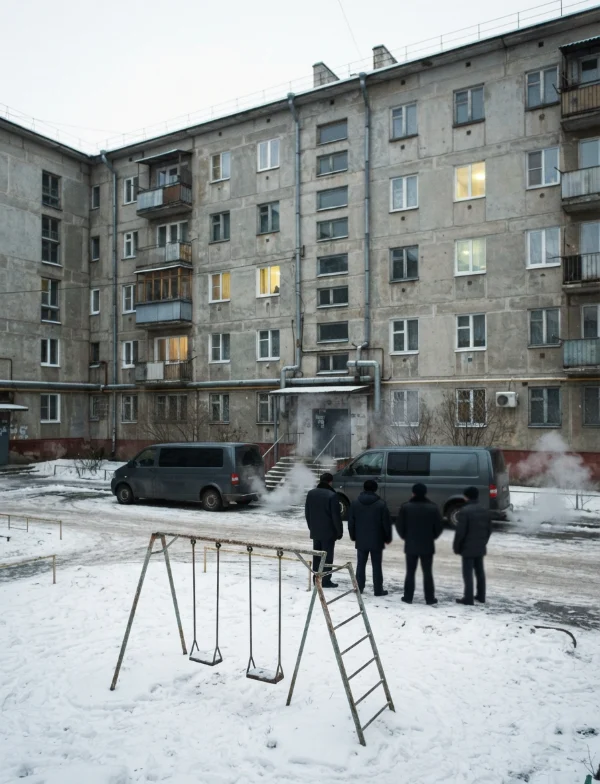
For eight years the killer of elderly women along the Volga had been a DNA profile without a name. Early on Tuesday, December 1, 2020, officers in Kazan detained a 38-year-old man named Radik Tagirov, and Russia's Investigative Committee said he was suspected in the murders of 26 of them.
The women had been killed in their own apartments in 2011 and 2012. Most were between 75 and 90 years old and lived alone. Investigators said the killer got through the door by presenting himself as a social services or utilities worker, then strangled the women with his hands or with whatever lay nearby, and often left with money and valuables. Nine of the killings were in Kazan. The rest stretched across Samara, Saratov, Chelyabinsk, Yekaterinburg, Perm, Izhevsk, Ufa and other cities, at least a dozen in all, many of them on or near the Volga, which is how the Russian press came to call the unknown man the "Volga maniac."
The first murder was reported to have been in Kazan in 2011, and within months more women had been found dead in the same city. One woman survived an attack, but she was blind and could not describe the man who attacked her.
The case defeated investigators for years. In 2017 federal authorities tripled the reward for information from 1 million to 3 million rubles, about $40,000. The Committee said thousands of tests had gone into identifying a suspect, and investigators said in a statement that Tagirov had been identified by DNA and shoe prints left at the crime scenes. He already had a record: a 2009 conviction for theft.
Investigators said Tagirov confessed after he was detained. In a video the police released online, he appeared in handcuffs and admitted to committing murders, though he did not say how many. Asked why he had killed rather than simply robbed, he said he could not explain it. "All that happened spontaneously. I wanted to eat. I lived partly on the street," he said of the first killing, which he said he could not date. He chose strangling, he said, because he thought it was quiet, fast and painless for the women.
The Committee's figure was 26. Press reports linked anywhere from 19 to 32 deaths to the same man, a count that, if it held at the top end, would make him one of the most prolific serial killers in modern Russia.
What was known on December 1, 2020. Tagirov had been detained as a suspect and had not been charged or tried; the account of his methods, the forensic match and his confession all came from investigators, and the quotations are from the police video as translated in English-language reports. The murder count was unsettled that day: 26 in the Committee's investigation, between 19 and 32 in press reports. None of the women was named in the reports cited here.
Sources
- Russia Detains Suspect in Killings of 26 Elderly Women, The Moscow Times
- Russia detains suspected serial killer dubbed the "Volga maniac", CBS News (Alexandra Odynova)