Federal Government Executes Dustin Honken for the 1993 Murders of Five People, Including Two Young Sisters
The Iowa methamphetamine dealer killed two men who could testify against him, and a mother and her daughters, 10 and 6. He was the third federal prisoner put to death that week.
Published
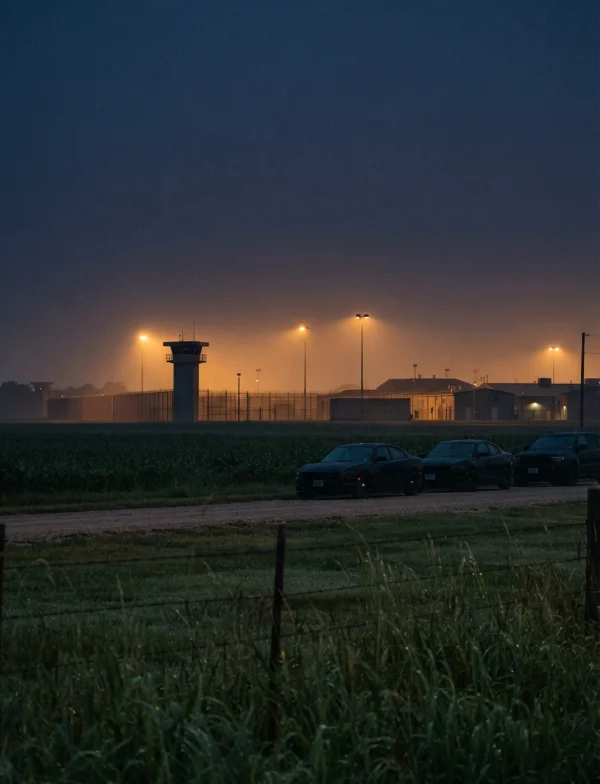
Twenty-seven years after he killed five people to keep himself out of prison, Dustin Lee Honken was put to death by the United States government. He was pronounced dead at 4:36 p.m. on Friday, July 17, 2020, at the federal prison in Terre Haute, Indiana, the third federal inmate executed that week.
In 1993 Honken was a methamphetamine dealer in Iowa with a problem: people who could send him to prison. Greg Nicholson had become a government informant and testified against him on federal drug charges. Honken kidnapped Nicholson, along with Lori Duncan, a single working mother, and her two daughters, 10-year-old Kandi and 6-year-old Amber, and shot all four and buried them, according to the Justice Department. He also killed Terry DeGeus, a man he thought might testify against him too, beating him with a bat and shooting him.
On October 14, 2004, a jury in the federal court for the Northern District of Iowa found Honken guilty of numerous federal crimes, among them five counts of murder during a continuing criminal enterprise, and he was sentenced to death.
For years no federal execution was carried out. The Justice Department had last put a prisoner to death in 2003, and in June 2020 Attorney General William Barr ordered dates set for four men on federal death row, all convicted of murdering children. Honken's was July 17. Daniel Lewis Lee was executed on Tuesday of that week and Wesley Ira Purkey on Thursday, both at Terre Haute.
Honken's lawyers tried to stop it. On Tuesday, U.S. District Judge Leonard Strand denied his request to delay the execution because of the coronavirus pandemic and rejected his motion to declare it void. His spiritual adviser, Father Mark O'Keefe, who gave him last rites, also asked for a delay over the risk of the virus and was refused. Honken had become a Catholic in prison, and Cardinal Joseph Tobin had written to President Donald Trump asking him to commute the sentence, describing what he called Honken's "spiritual growth in faith and compassion."
"Dustin Honken was redeemed," his attorney, Shawn Nolan, said after the execution. "The man they killed today was a human being, who could have spent the rest of his days helping others and further redeeming himself."
The Justice Department saw it differently. "Nearly three decades after Honken coldly ended the lives of five people, including two young girls, all in an effort to protect himself and his criminal enterprise, he has finally faced justice," spokesperson Kerri Kupec said.
The account of the 1993 killings is the Justice Department's, matching the counts on which Honken was convicted. Reports differ on when the death sentence was formally imposed (the department says 2004, while CNN reported October 2005), so this story gives only the date of the jury's verdict. Reports also differ on whether all five people were killed in July 1993, so this story says only 1993.
Sources
- Statement by Department of Justice Spokesperson Kerri Kupec on the Execution of Dustin Lee Honken, U.S. Department of Justice
- Executions Scheduled for Four Federal Inmates Convicted of Murdering Children, U.S. Department of Justice
- Dustin Lee Honken executed, CNN