Arkansas Executes Kenneth Williams, the Last of Four Men Put to Death in Eight Days
He killed Cecil Boren after escaping the same prison in 1999. The family of another man he killed had asked the governor to spare him.
Published
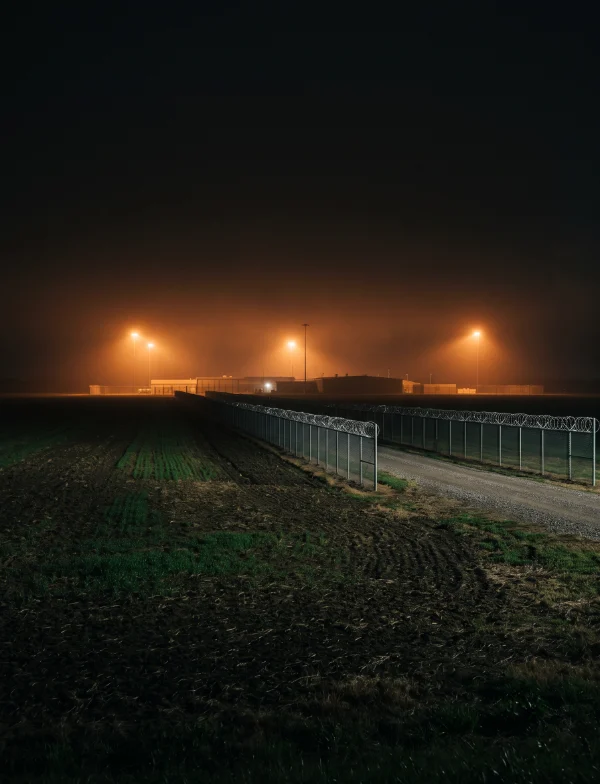
The execution of Kenneth Williams was set for 7 p.m. on Thursday, April 27, 2017, and for more than three hours it waited on the courts. His lawyers argued in state and federal court that he was intellectually disabled and therefore could not be executed, and that his medical conditions, among them sickle cell trait, lupus and organic brain damage, would make a lethal injection go wrong. The Arkansas Supreme Court, a Pulaski County circuit judge, the federal appeals court in St. Louis and a federal district judge all turned him down. At 10:13 p.m. the U.S. Supreme Court denied every remaining motion for a stay. The injection began at 10:52 p.m. at the Cummins Unit near Grady, and Williams, 38, was pronounced dead at 11:05.
He was the fourth man Arkansas had executed in eight days. Gov. Asa Hutchinson had scheduled eight executions in 11 days because the state's supply of midazolam, the sedative in its three-drug protocol, would expire at the end of April; the courts stopped four of them. Ledell Lee died first, then Jack Jones Jr. and Marcel Williams in the country's first double execution in 17 years.
Williams had been at Cummins once before. In December 1998 he kidnapped and murdered Dominique "Nikki" Hurd, 19, a cheerleader at the University of Arkansas at Pine Bluff, and tried to kill her friend. Sentenced to life without parole, he escaped from Cummins 19 days into the sentence. On October 3, 1999, he shot Cecil Boren, 57, seven times at his home near the prison and took his truck. He was caught in Missouri after a high-speed chase that ended in a crash that killed Michael Greenwood, 24, a truck driver from Springfield. In a 2005 letter to the Pine Bluff Commercial he admitted that on the day he killed Hurd he had also killed Jerrell Jenkins, 36, of Pine Bluff. The death sentence came in 2000, for Boren.
In the last days the Greenwood family did something no one expected. They paid for Williams's daughter, Jasmine, and the granddaughter he had never met to travel to see him, and Michael Greenwood's daughter, Kayla, and his widow asked the governor for clemency. "His execution will not bring my father back or return to us what has been taken, but it will cause additional suffering," Kayla Greenwood wrote. That afternoon she said the family had never been told of Williams's clemency hearing; had they known, they would have testified against his execution.
Williams read a statement from the gurney. He named the families of Dominique Hurd, Jerrell Jenkins, Cecil Boren and Michael Greenwood. "I was more than wrong," he said. "The crimes I perpetrated against you all were senseless, extremely hurtful and inexcusable." He thanked Kayla Greenwood for bringing him his child and grandchild, said he was not the same person he had been, and then spoke in tongues.
About three minutes into the procedure his body began to move. Kelly Kissel of the Associated Press, one of the media witnesses, described him "coughing, convulsing, lurching, jerking, with sound" for more than 20 seconds. A prison spokesman, Solomon Graves, said Williams shook for about 10 seconds. The governor's spokesman, J.R. Davis, called it a known involuntary reaction to midazolam. "The long path of justice ended tonight," Hutchinson said in a statement minutes later. "There has never been a question of guilt." His statement named Hurd, Boren, Greenwood and Jenkins but, in its list of families who had finally seen justice, left out the Greenwoods, who had asked him to spare the man who killed their father.
What this story covers. The hour-by-hour record of the day, the court rulings, the crimes, Kayla Greenwood's account of the clemency hearing, Williams's last words, the witnesses' descriptions and the statements of Gov. Asa Hutchinson and Attorney General Leslie Rutledge come from the Arkansas Times's live report from the Cummins Unit on April 27, 2017. The execution timetable, the midazolam deadline, the earlier executions and J.R. Davis's response come from NPR's report of April 28. Kayla Greenwood's letter is quoted as published.
Sources
- The Kenneth Williams' execution thread, Arkansas Times
- Arkansas Executes 4th Inmate In 8 Days, NPR