Goiânia Police Arrest Security Guard Who They Say Confessed to 39 Killings
After a months-long hunt for a motorcyclist shooting strangers, police stopped Tiago Henrique Gomes da Rocha, 26, on Avenida Castelo Branco.
Published
For most of 2014 the police in Goiânia were hunting a man they could describe down to his eyebrows but could not name. Through the first eight months of the year someone on a motorcycle had been shooting strangers in the city, at bars, at bus stops, in squares and empty streets, even through the windows of cars stopped at traffic lights. He took nothing from the people he shot. Of the 16 killed between January and August, 15 were women and girls between 13 and 28; the other was a man of 51.
The Civil Police set up a task force, and for two months it pieced together everything it could about the rider and his machine. At one point 33 police teams were watching the streets. A judge even issued a temporary arrest warrant with no name on it, only a description: a white man of about 25, roughly 1.87 meters tall and athletically built, clean-shaven, with short straight black hair and thick eyebrows, who usually dressed well, wore a black Taurus helmet and rode a black Honda Fan 150 with a disc brake and a split chrome front guard.
On October 14, 2014, the same day the force had doubled the number of officers on the case, one of the teams saw a man matching it riding along the northern stretch of Avenida Castelo Branco late in the afternoon. They stopped him and realized, at last, who they had. He was Tiago Henrique Gomes da Rocha, 26, a security guard who had worked for at least three contract security firms in the city.
At the police station, according to police, his story turned out to be far larger than the investigation had imagined. He admitted not only the 2014 shootings but killings from earlier years, 39 in all, and when the figure was announced the case made news around the world.
Months later a medical board of the Goiás state court found that he had antisocial personality disorder but was "entirely capable of understanding the unlawful character" of what he had done, and called him a man of extremely high dangerousness, likely to offend again. By October 2024 he had been convicted of 35 murders in a long series of jury trials, with sentences totaling nearly 700 years. Because his crimes came before Brazil raised its maximum prison term, he can be held for no more than 30 years. He has spent the decade in an isolated cell at the Aparecida de Goiânia prison complex, and Judge Jesseir Coelho de Alcântara has said he could walk free at 56, in 2044.
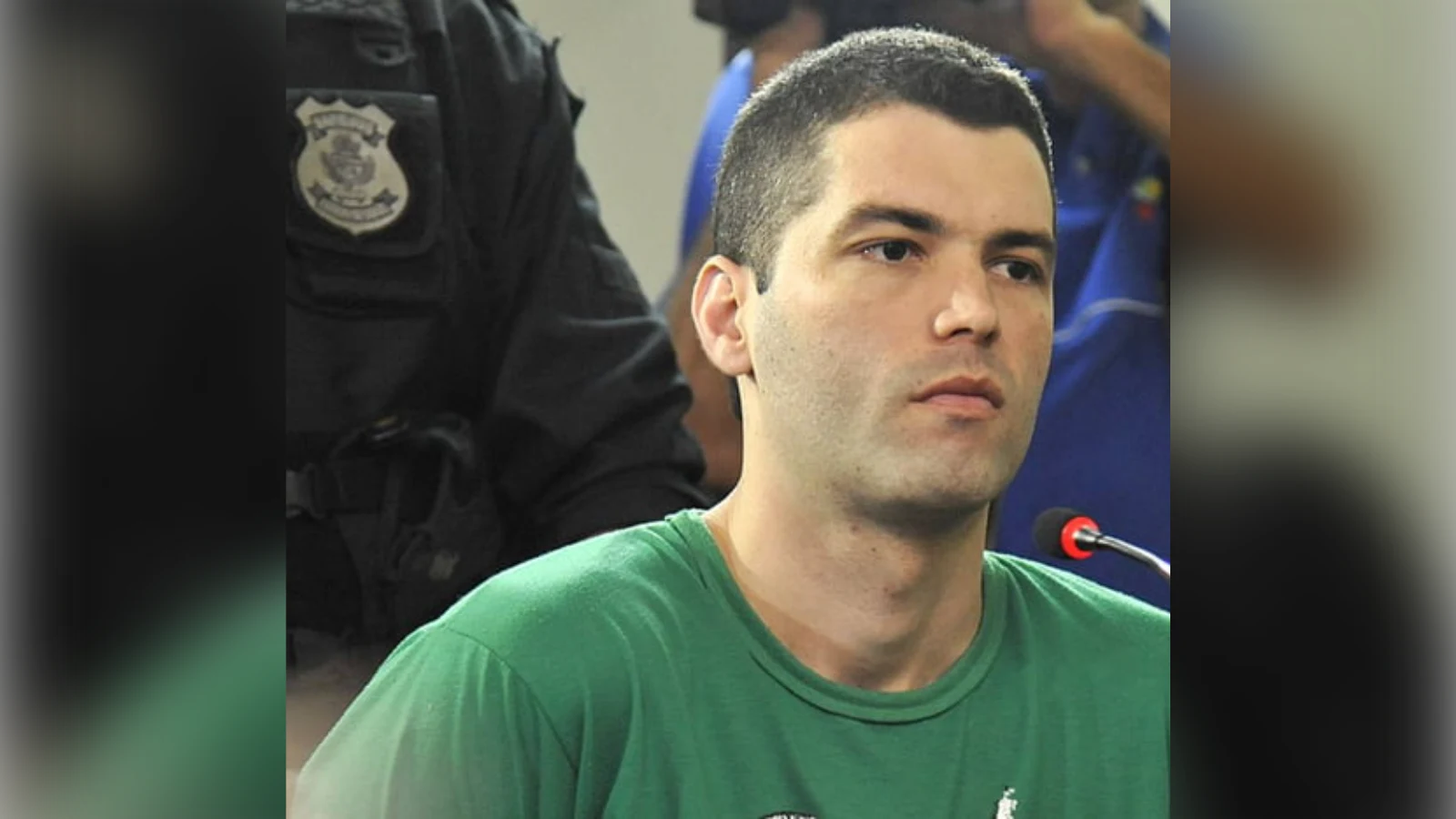
What this story covers. The killings of 2014, the task force, the unnamed warrant and its description, the arrest on Avenida Castelo Branco, the confession to 39 killings, the psychiatric finding, the later convictions and the 30-year limit come from Galtiery Rodrigues's report for Metrópoles of October 14, 2024, marking ten years since the arrest; the quotations are our translations from the Portuguese. The figure of 39 was his own account to police, not an established count, and because the number of convictions grew trial by trial, totals given in other years differ. The image is a photograph of Gomes da Rocha in court, taken after his arrest.