Robert Hansen, the Anchorage Baker Who Hunted Women in the Wilderness, Dies at 75
He pleaded guilty to four murders in 1984 and confessed to 17; with his death the full count and many of the graves may never be known.
Published
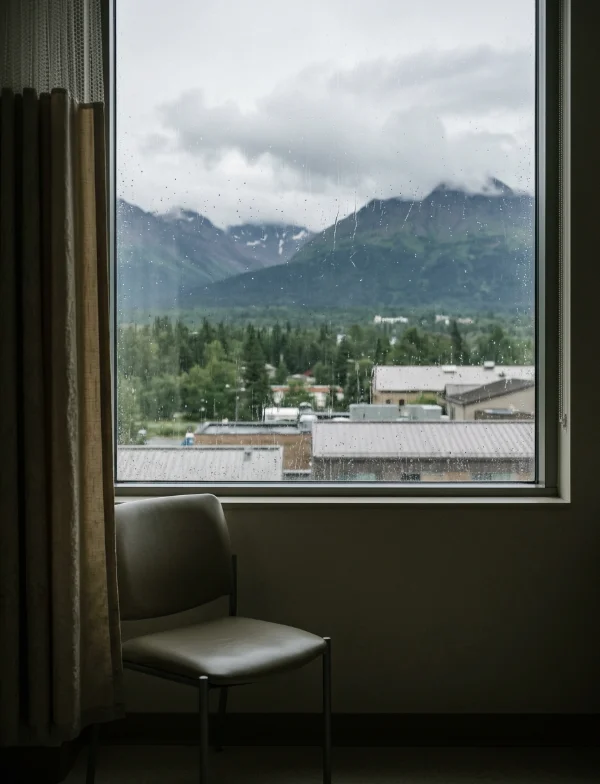
Robert Hansen died at about 1:30 in the morning on Thursday, August 21, 2014, at Alaska Regional Hospital in Anchorage. He was 75. He had been taken to the hospital from the jail the day before, and the Department of Corrections said his health had been failing for a year. Sherrie Daigle, a deputy director at the department, said the medical examiner would determine the cause, though it appeared he had died of natural causes.
Thirty years earlier he had been the mild baker in a strip mall at Ninth Avenue and Ingra Street, a family man who lived across town. In February 1984 he pleaded guilty to four murders and was sentenced to 461 years. He confessed to killing 17 women and raping 30 more over a dozen years in the 1970s and early 1980s, many of them dancers and prostitutes from the downtown blocks the pipeline boom had filled with transient workers, drug dealers and women with no one to notice when they disappeared. He kidnapped them at gunpoint, tied them up and flew them to remote places to kill them, and he admitted that he sometimes let them loose in the woods so he could stalk and hunt them first. Police suspected the true number was higher. Under the plea deal he agreed to help find the graves, but only a dozen bodies were located.
The first, he told investigators, was a woman he picked up in town and drove out the Glenn Highway instead of to his home in Muldoon. When his truck stuck in the mud she ran, and he stabbed her in the back. He said she was the woman police called Eklutna Annie, found in 1980 by electric workers repairing a power line outside Eagle River. He never learned her name, he said, and she has never been identified.
What ended it was a teenager. In 1983 she ran into a Fifth Avenue motel in handcuffs and said Hansen had held her at his house, raped her and put her in his plane for a one-way flight. Months later searches of his home turned up enough to charge him with four murders, and a map marked with 17 locations that prosecutors believed showed where bodies lay. Frank Rothschild, the assistant district attorney who prosecuted him, remembered the day the evidence was laid out. "He was mild-mannered Bob the Baker, and as I'm looking at him, all of sudden he transformed," he said. "The hair on the back of his neck stood up and his neck got red, and he was pissed." In Hansen's mind, Rothschild said, "there were good girls and bad girls."
He asked to serve his time outside Alaska, afraid of meeting men who had known the women he killed, and was sent to a federal prison in Pennsylvania, then to Minnesota, before coming back in 1988. In 1990 guards at Lemon Creek in Juneau found an aeronautical chart, a hand-knit winter hat, magazine articles on plastic explosives and letters to a boat broker among his things, and he was moved to the new Spring Creek Correctional Center in Seward. He spent many of his last years there as the prison barber. On May 11, 2014, he was moved to the medical unit at the Anchorage jail.
"He will not be missed," Rothschild said on the day he died. Glenn Flothe, the retired state trooper whose work led to his capture, asked that the day belong to someone else. "On this day we should only remember his many victims and all of their families, and my heart goes out to all of them."
What this story covers. The time and place of death, the department's statement on the cause, the prison history and the quotations come from the Anchorage Daily News report by Laurel Andrews and Kyle Hopkins published August 22, 2014; Hansen's account of the first killing is what he told troopers, as reported at the time. The number of his victims was never established: he confessed to 17, the same report's opening puts it as high as 21, and some of the dead have never been found or named. The cause of death had not been confirmed by the medical examiner when the report was published. The image is an illustration of a rainy hospital window in Alaska, not the real hospital.
Sources
- Serial killer Hansen dies; 'World is better without him,' trooper says, Anchorage Daily News (Laurel Andrews and Kyle Hopkins)