Brazilian Police Find Two Missing Women Buried at a Garanhuns Home and Arrest the Three People Living There
The suspects later told police they belonged to a sect and claimed they had used the victims' flesh in pastries, a claim police said they could not prove.
Published
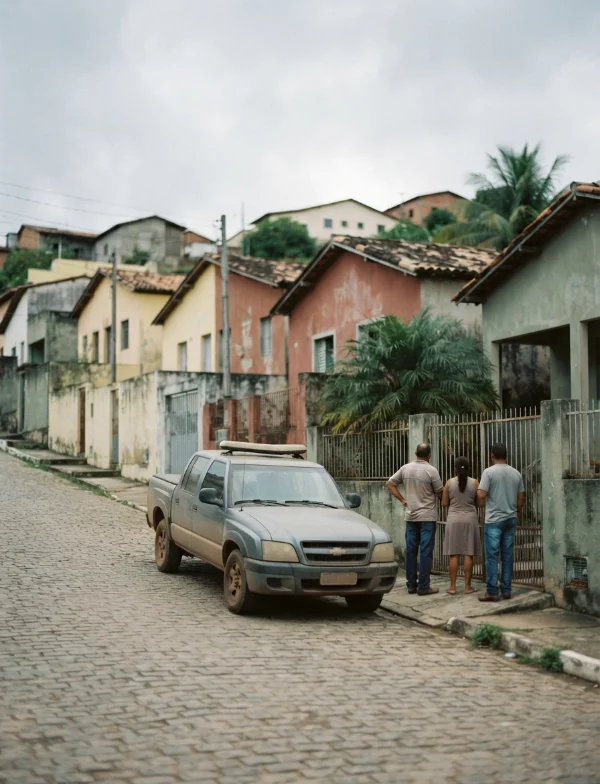
Two women had vanished in Garanhuns, in Brazil's Pernambuco state, in early 2012. On April 11, police found their bodies buried behind a house and arrested the three people living there.
Police had traced the suspects after a credit card bill showing purchases in Garanhuns shops arrived at the home of the first missing woman's family, and store security footage identified them, said the police chief leading the case. A court granted search and preventive-arrest warrants against a man and two women on April 9. Officers arrested Jorge Beltrão Negromonte da Silveira, Isabel Cristina Pires da Silveira and Bruna Cristina Oliveira da Silva at the house in the Jardim Petrópolis neighborhood, and one of the women confessed and showed police where the bodies were buried. The victims were Gisele Helena da Silva, 31, missing since February, and Alexandra da Silva Falcão, 20, missing since March 15. Police said the younger woman had been lured with the promise of a job.
In statements to police the next day, the three claimed they belonged to a sect called Cartel that preached purification of the world and population reduction, and said they had used the victims' flesh in savory pastries that were sold in the town; police later said they could not prove the pastry claim. In June 2012 the three were formally accused of a third killing, of Jéssica Camila da Silva Pereira, 17, in Olinda in May 2008. They were convicted of that murder in 2014, and in December 2018 a jury in Recife convicted them of the two Garanhuns killings, sentencing Jorge Beltrão to 71 years, Isabel Cristina to 68 years and Bruna Cristina to 71 years and 10 months.
G1 reported in April 2012 that the married couple were both 52, while Agência Estado gave both their ages as 50 in June. The June 2012 report also spelled two of the victims' names as Giselly and Alexandra Falcão da Silva.
Sources
- Em Garanhuns, PE, corpos de duas mulheres são encontrados enterrados, G1 Pernambuco
- Em PE, suspeitos de mortes vendiam salgados de carne humana, diz polícia, G1 Pernambuco
- Trio de canibais é indiciado por terceira morte em PE, G1 (Agência Estado)
- Canibais são condenados por dois assassinatos cometidos em Pernambuco, G1 Pernambuco