Hungarian Police Arrest Four Men in Debrecen Over a Year of Attacks on Roma Families That Killed Six People
The national police chief said a racist motive was suspected. Investigators said evidence seized in a house search matched traces from the crime scenes.
Published
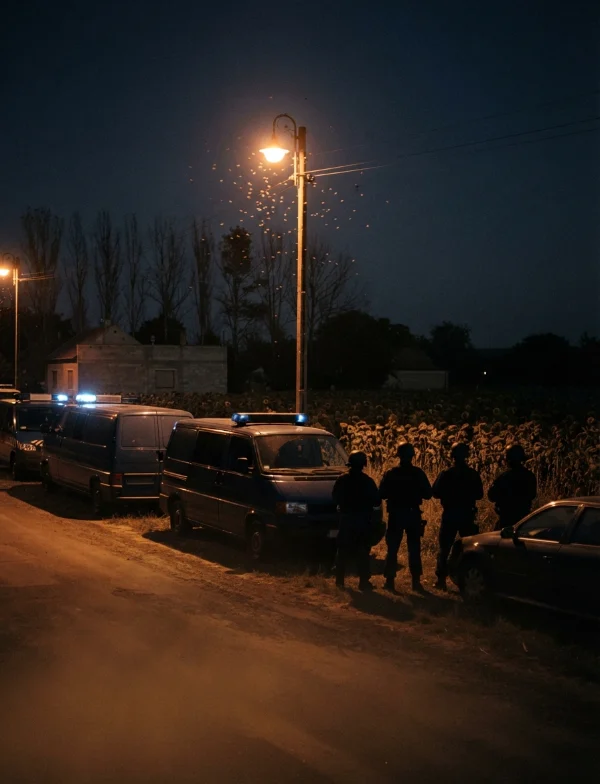
For 13 months, attackers fired on Roma homes in Hungarian villages and threw firebombs at them, killing six people, including a child. On August 21, 2009, police arrested four men in Debrecen.
The men, Debrecen residents aged 28 to 42, were detained at dawn at a nightclub in the city. National Police Commissioner József Bencze told an extraordinary press conference that a first comparison of evidence seized in a house search with traces from the crime scenes supported the belief that those behind eight attacks and six murders were in custody, and that a racist motive was suspected. Investigators had checked 4.5 million phone calls, reviewed 800 hours of surveillance footage and questioned more than 2,000 people. Bencze withdrew a reward of 100 million forints, saying tips had played no part in the arrests.
The first fatal attack, in November 2008, killed a man and a woman in Nagycsécs. In February 2009, a father and his young son were killed outside their home in Tatárszentgyörgy. A man was killed in Tiszalök in April, and in August a woman was killed in Kisléta and her 13-year-old daughter was seriously injured. Four days after the arrests, National Investigation Office chief Attila Petőfi said DNA evidence linked two of the suspects to the crimes. Árpád Kiss, István Kiss and Zsolt Pető were later sentenced to life without parole, a ruling that became final in January 2016, and István Csontos, who drove in the last two attacks, received 13 years.
Police said at the time of the arrests that the suspects were behind eight attacks, while the Hungarian Civil Liberties Union later listed nine attacks in the series.
Sources
- Rasszista indítékot sejt a rendőrség a romagyilkosságok mögött, Világgazdaság (vg.hu)
- Hungarian police say Roma murders planned, RTÉ News
- The sentencing of the defendants in the attacks against Roma victims is binding, Hungarian Civil Liberties Union (TASZ)
- Romagyilkosságok: kevesebb támadással gyanúsítják a testvérpárt, Világgazdaság (vg.hu)