Police in Iran Arrest a Man Who Confessed to 16 of Mashhad's "Spider Killings"
For a year, women had been found dead in the holy city. Police said a 39-year-old father of three admitted killing 16 of them in his home.
Published
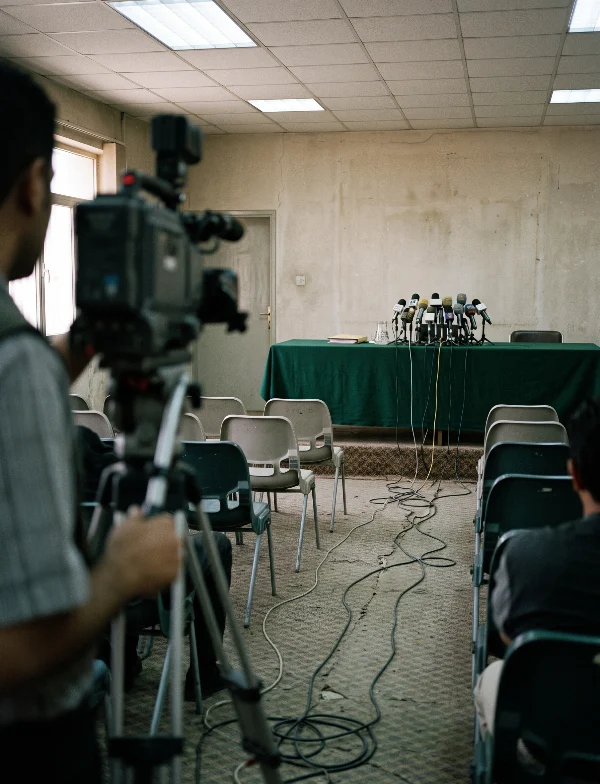
For a year, women in Mashhad, one of Iran's holiest cities, had been turning up dead. On July 25, 2001, police announced they had arrested the man responsible for most of the killings.
Iran's national police chief, Mohammad Baqer Qalibaf, said on state television that the suspect was a 39-year-old husband and father of three, arrested in connection with 16 of the deaths. A police official said the man had confessed that he killed the women in his home while his family was away. Qalibaf said the remaining killings were believed to be the work of other men, who had also been arrested and appeared to have acted independently. Within weeks the suspect was named as Saeed Hanaei, a construction worker who lived with his wife and children in a poor Mashhad neighborhood.
The killings had begun in July 2000. The women, who had records for drug use and prostitution, were found wrapped in their chadors and left by roads or in canals. The Iranian press called them the "spider killings," likening the victims to insects caught in a web. The women's families, ashamed, had not come forward to claim their bodies, and their names had not been published. One of the women Hanaei later confessed to killing was Azam Abdoli, 45, found in February 2001.
As the deaths mounted, so did criticism of the police. A member of parliament from Mashhad said that anywhere else in the world the investigators would have been fired. An earlier arrest, of a 22-year-old laborer in April 2001, had come to nothing when his confession appeared to be a hoax. Hanaei told police that he had started killing after his wife was mistaken for a prostitute. "I killed the women for the sake of God and for the protection of my religion because they were prostitutes and corrupting other people," he told reporters in August.
Hanaei was sentenced to death in October 2001 and hanged in the Mashhad prison compound on April 17, 2002.
Iranian press reports put the number of women killed by the time of the arrest at 19, while the judge in the case told a newspaper it was 17.
Sources
- Iran: 'Spider Killings' Claim 19 Prostitutes, Radio Free Europe/Radio Liberty
- Police make arrest in prostitute killings, The Globe and Mail
- Prostitute killings win praise, Deseret News (wire)
- Prostitute killer hanged in Iran, Irish Examiner